What Can We Learn From Stretford and Urmston By-Election?
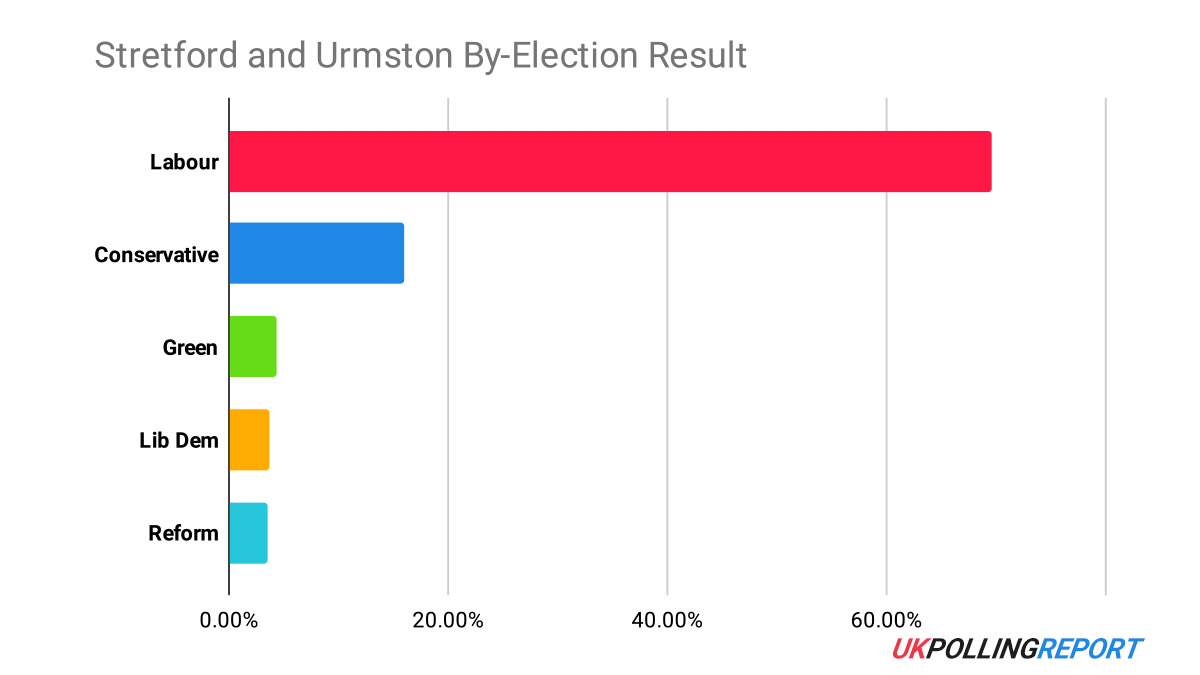
As Stretford and Urmston declared in the early hours of the morning, Andrew Western is the Labour Party's newest MP. The final result saw Labour on 69.6% (+9.3) with the Conservatives sinking to 15.9% (-11.7). This showing was the worst for the party in Stretford and Urmston since it was created as a seat in 1997.
Beyond what we already knew, that Labour is popular in Stretford and Urmston and is in the ascendancy nationally, can we learn much more from the North Western by-election?
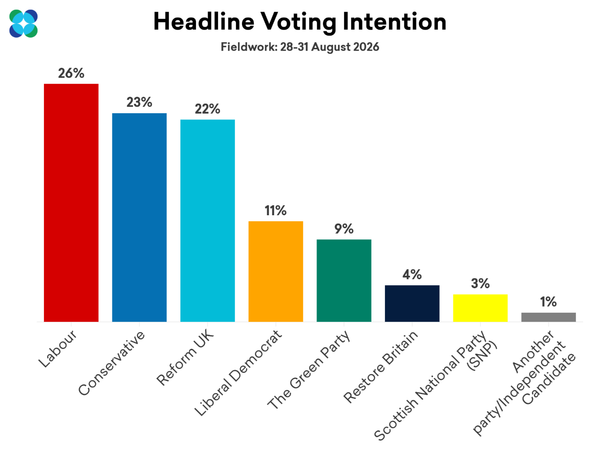
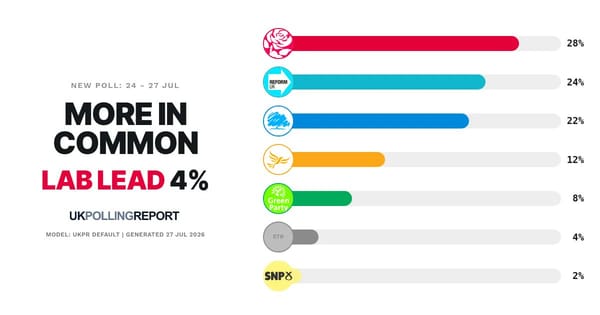
Firstly, as with Chester, the result does support the general field of polling. Although the swing (10.5%) was not of the same magnitude as the national level polling might suggest (~15%), this was expected. Considering the nature of the seat as one with a high pre-existing Labour vote share, there is, realistically, only so much room for it to grow.
Moreover, the results for both the Greens (+1.6%) and the Liberal Democrats (-2.4%) are in line with their national figures. Somewhat unlike in the City of Chester. Where the result does further cast doubt on the national picture is with Reform UK. The party registered 3.5%, exactly the same proportion as in 2019. This should introduce at least some caution in treating polls with near double-digit vote shares for the party as fact.
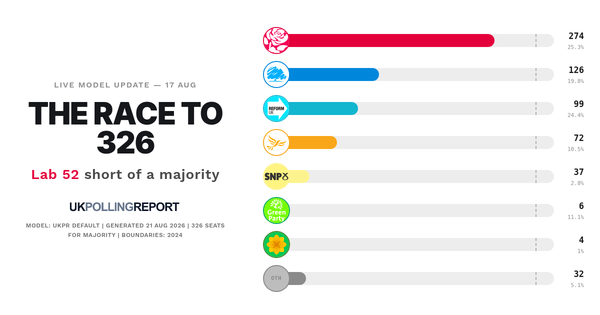
Savanta's MRP poll, which suggested Labour would win a 300 seat majority, came off especially well - with the tables predicting both Conservative and Labour vote shares in Stretford to within 2% of the eventual result. The fieldwork was conducted nearly two weeks ago and the result was not modelled as a by-election, so there should perhaps be some degree of caution in assuming this result would hold across constituencies. Though it could suggest uniform national swing is underselling how Labour's vote share will translate to seats come the next election.
Crucially, however, turnout was very low. Whether because of the freezing temperatures, the foregone conclusion or simply by nature of the mid-term contest, it came in at 25.8%. This was significantly lower even than in nearby Chester. Of course, this means the electorate has a very different composition to what might be expected in a general election, or in polls, and should introduce wariness into some specific judgements.