Voters Want Closer EU Relations, Why Aren't National Parties Bothered?
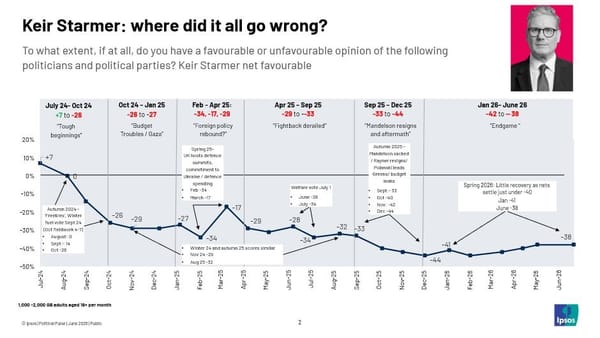
Voters increasingly regret Brexit and it's not difficult to understand why. The government's popularity is at a staggering low, only matched by levels of confidence in the economy. It's no surprise that Brexit, a policy associated with this government, is now viewed with scepticism as the campaign for closer EU relations, so heavily built on economic arguments, is back in vogue.
These trends are reflected across different polling questions by different pollsters. New polling from Redfield & Wilton with UK in a Changing Europe put "Join" on 56% to 44% for the status quo, Omnisis gave rejoin a 16% lead all the while YouGov's Brexit tracker says 67% now think the government is handling it badly. Taking a look into specific alternatives, opposition to a 'Swiss-Style' relationship is even lower, with Opinium putting this at 21% and YouGov 24%. These patterns are now somewhat persistent, and have all been magnified in recent months.
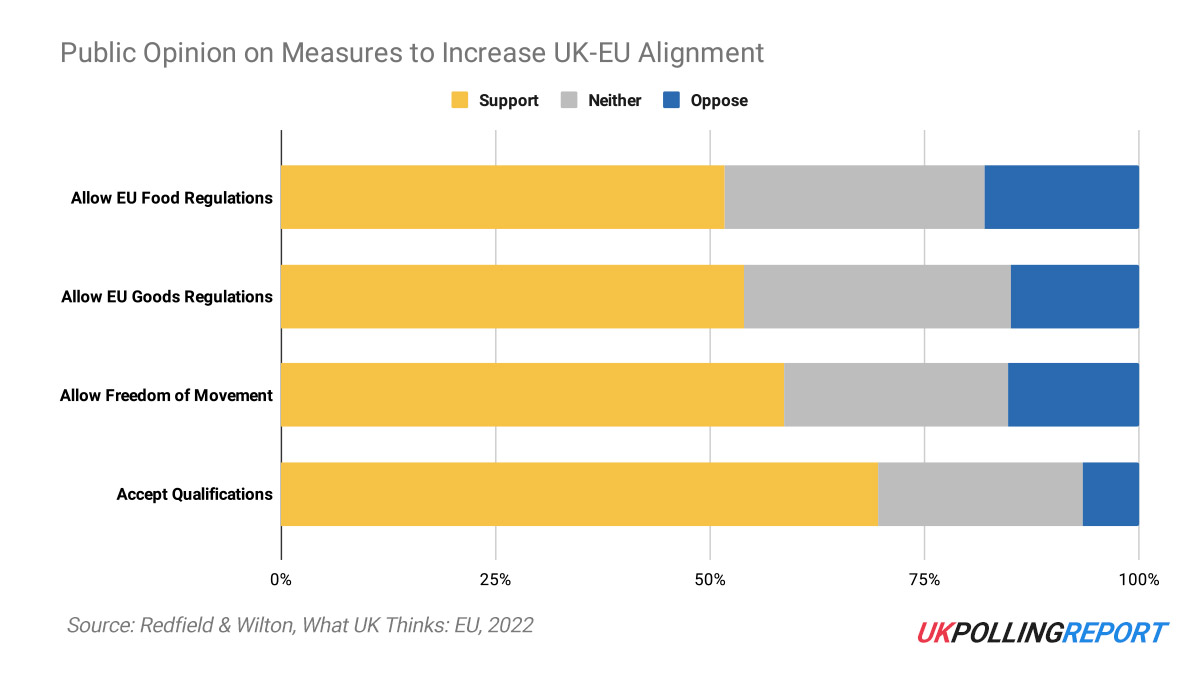
Polling from Redfield & Wilton and What UK Thinks: EU provides even deeper insight. They ask about four specific measures to bring UK-EU relations closer, all of which see significant margins of support.
Perhaps most surprising is the fact just 14% of voters oppose the return of freedom of movement. Even amongst those who support staying outside of the European Union, 41% would support the reintroduction of the policy so integral to the initial campaign to Leave. This could partly be explained by the question, which focused more on the policy itself, without mentioning the phrase "freedom of movement" specifically. Nonetheless, it is still a striking finding.
The level of support for moving closer to the European Union begs an obvious question: why are no major national parties making the case for it?
There is one obvious answer to this. Voters may be tired of Brexit, but they're also tired of hearing about it. Lord Ashcroft's polling found that voters, by a margin of 6%, support trying to "make the best of Brexit" over re-opening the issue. Whilst, according to YouGov's salience tracker, it's the fifth most important issue to voters. This can be contrasted to the period from mid-2016 to the start of 2020, when it remained the top concern.
Secondly, although public opinion is now more pro-European, Brexit identities have not disappeared. A number of polls find that only around 20% of leave voters have changed their mind. Meanwhile, although there has been increasing alignment over the last few years, Brexit preferences still cross-cut party support. From Redfield & Wilton's recent polling on the issue, 22% of Labour voters back remaining out of the EU, whilst 33% of the Conservatives support rejoining. Re-opening the issue would carry risks for either party.
This is perhaps more acute for Labour, considering the voters they've gained since the 2019 election are, relatively, more in favour of remaining out than their core support. For Keir Starmer, re-opening the divide could risk eroding the progress of the last few months. The Liberal Democrats may also face a similar challenge, based on the inclinations of their target seats.
Recent changes in public opinion towards the EU are largely driven by demographic shifts. These trends look set to continue. So as much as the major parties may want to steer clear of Brexit for the time being, it doesn't look like an issue that's going away any time soon.