Should Karl Turner Defect to Reform?

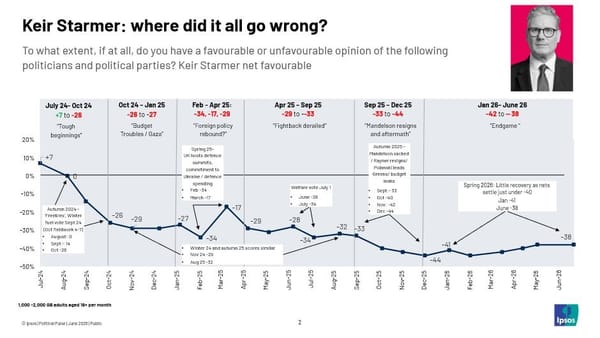
Karl Turner, the long-serving Labour MP for Kingston upon Hull East (first elected in 2010 and a local born-and-bred Hull man), is already in open conflict with the Labour leadership. As of today (31 March 2026), he has had the Labour whip suspended after repeated public criticism of Starmer’s government, in particular plans to restrict jury trials for less serious offences, which he has called misguided and “stupid.”
Turner has also criticised Downing Street directly and questioned the handling of issues around former chief of staff Morgan McSweeney. With the whip gone he could face deselection if he stays. Defecting to Reform UK and triggering a by-election would let him fight on a platform that now aligns better with his constituency’s shifting mood. In the 2024 general election, Turner held the seat for Labour with 43.8% but saw Reform UK surge to a very strong second place on 30.6% (a +13.8% swing), cutting his majority to just 3,920 votes on a low 42.2% turnout. The constituency backed Brexit in the 2016 referendum.
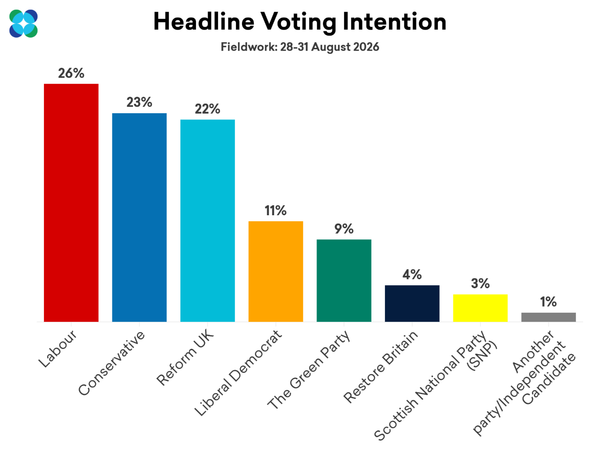
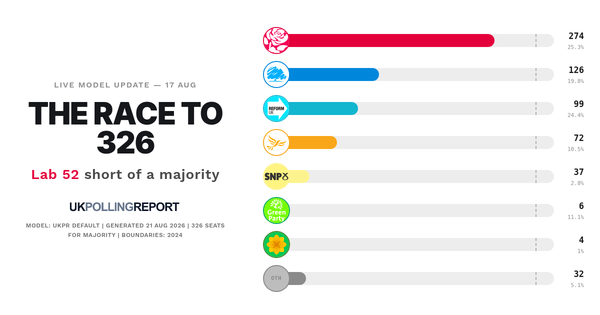
Reform then won the Hull and East Yorkshire mayoral contest in May 2025 outright, with Labour finishing a distant fourth. UK Polling Report's default model predicts Reform could win his seat by a comfortable double digit percentage margin. Hull East is classic red-wall territory—working-class, Brexit-voting, and increasingly disillusioned with Labour’s record on immigration, net zero costs, taxes, and “cautious” delivery. Reform’s core offer (stop the boats, mass deportations of illegals, scrap net-zero subsidies, cut waste, lower taxes, tougher sentencing, and “common sense” politics) resonates here far more than Starmer’s agenda.
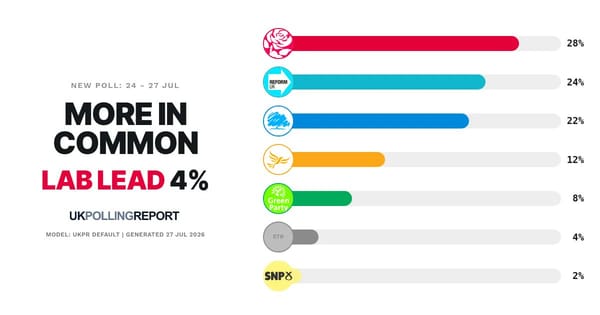
Turner could rebrand as the authentic local voice who has broken with an out-of-touch London-centric Labour Party. As a criminal barrister with deep roots in Hull, he brings credibility that many Reform candidates lack. A by-election would be a clean mandate test: voters who backed him as Labour in 2024 could now back him as Reform, especially with the party riding high in national polls and attracting high-profile defectors (mostly ex-Conservatives so far). It would be a dramatic signal of realignment, proof that even longstanding Labour MPs now see Reform as the vehicle for the working-class vote Labour has abandoned. Personally, it offers him a high-profile future in a rising party rather than a side-lined backbench existence (or deselection) under Starmer.
On the other hand defecting from Labour to Reform and standing in a by-election would be seen as a betrayal. Turner’s entire career, his trade-union family roots, criminal-law barrister, focus on access to justice, and consistent (until recently) party loyalty places him on the centre-left, not the populist right. Jumping ship now could look like naked opportunism rather than conviction politics. Electorally it is high-risk. While Reform ran second in 2024, by-elections are different beasts: national media scrutiny, Labour would throw everything at retaining a symbolic seat, and turnout could collapse or swing against the “turncoat.” Turner’s local popularity is tied to being Labour’s man in East Hull for 16 years; voters may punish the betrayal rather than reward it. Reform has so far drawn almost all its defectors from the Conservatives, no sitting Labour MP has crossed the floor. A Labour-to-Reform move would be unprecedented - Lee Anderson detoured via getting elected for the Conservatives - and could be portrayed as a lurch into Farage-style populism that alienates Turner’s natural base.
With the whip already suspended, the cleanest and least damaging route is to sit as an independent or independent Labour MP, continue criticising specific policies from within the broad Labour family, and fight any deselection battle on his own record rather than handing Reform a propaganda coup and his constituents a divisive by-election for which they never asked. The raw electoral maths, local discontent, and personal survival in a changing political landscape might encourage a defection. The argument against rests on loyalty, ideological coherence, and the high probability that defectors are remembered as opportunists who threw away a safe seat for a gamble. However he is on the record as warning he was “not fearful of having the whip removed” and he had warned the whips he would consider triggering a by-election to make his “principled point” - a by-election Reform could win.