YouGov/Sunday Times - CON 31, LAB 44, LD 11, UKIP 8
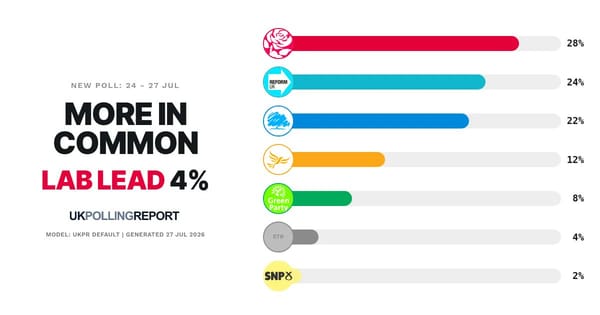
This week's YouGov/Sunday Times tables are online here. Topline voting intention is CON 31%, LAB 44%, LDEM 11%, UKIP 8%. In line with the increased level of Lib Dem support Nick Clegg's approval figures are also up slightly - his net approval is minus 45, still extremely bad, but his least bad figures since March.
Most of the rest of the survey dealt with the subject of Europe, and like ComRes's poll last nights showed hints of a shift in public opinion towards remaining in the EU.
As usual a majority of people (59%) support the idea of a referendum on Europe - people will almost always say they support a referendum on anything we ask about. On how they would vote in a referendum on the EU membership, people would vote to leave by 42% to 36%. This is a significantly lower lead for leaving the EU than YouGov usually find, indeed, they ask it as a monthly tracker and only last week found a 15 point lead for leaving the EU. This could easily be a blip, but could also be a sign of the intervention of the US Embassy and Richard Branson's comments already having an effect.
Asked if there should be a straight referendum or the renegotiation then a referendum that David Cameron is likely to announce, people prefer the latter by 48% to 22%. Were David Cameron to renegotiate Britain's relationship with EU and then recommend people vote to stay in, in the way Wilson did in 1975 and Cameron is likely to say he'll do later this month, then people say they would vote to stay in by 50% to 25%. This too is a shift from the last time YouGov asked the question in July 2012, when people said they'd vote to stay in by 42% to 34%.
The contrast between how people would vote in a straight referendum now and how people would vote in a post-negotiation referendum with Cameron recommending a vote to stay in is mostly a switch of Conservative voters, who say they would vote 51%-33% to leave in a straight referendum now, but would vote 64%-21% to stay if Cameron recommended a yes vote on renegotiated terms.
Asked about the potential impacts of leaving the European Union, by 40% to 9% people think Britain would have less influence if we left the EU and think our relationship with the USA would be worse by 24% to 10%. They are far more divided on the potential economic impacts of Britain leaving the EU - 29% think the country would be better off outside the EU, 34% worse off. 27% think leaving the EU would be good for employment, 30% bad for employment. 18% think they personally would be better off, 20% worse off.