YouGov/Sun - CON 36, LAB 42, LD 9
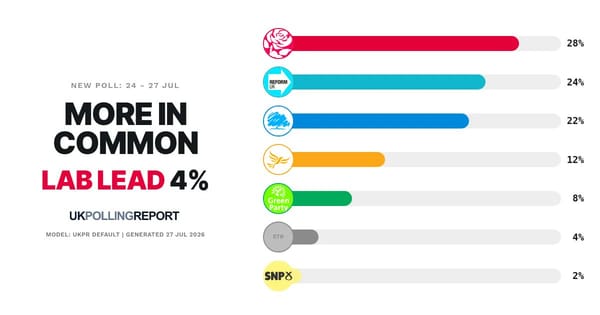
Tonight's YouGov poll for the Sun has topline figures of CON 36%, LAB 42%, LDEM 9% - pretty much par for the course for YouGov's recent polling.
Along with the reprivatisation of Northern Rock, the biggest political story today seems to be the teaching and civil service unions voting for strike action. It's too early to have any polling on it yet, obviously, but there have been some previous polls. In May ComRes asked if people agreed or disagreed with the statement that "In most cases I have sympathy for people going on strike against public spending cuts", and found 48% agreed, and 37% disagreed.
However, sympathising with people whose jobs are at risk from cuts is not necessarily the same as supporting what action they take - a much older YouGov poll from September last year asked if people would support or oppose strike action in protest against public sector job cuts - 34% said they would, 45% would not (of course, the difference could be as much passage of time as wording... but I would expect a support question to show lower support than a sympathise question!)
The public are also likely to take different attitudes towards different professions striking - YouGov have not asked questions
specifically about whether people would support strikes against cuts amongst various professions, but they have asked about whether, in principle, particular groups of workers should have the right to strike. Generally speaking a majority of people support the right to strike amongst most professions, with the expected exceptions for things like the police and the army. A healthy majority think transport workers, refuse collectors, etc should have the right to strike. However, it's pretty close in terms of teachers, where only 52% support their right to strike (40% think they should not), and while it is not on the cards at present, a majority oppose doctors or nurses having the right to strike. In this context we're not talking about the right to strike, but it may be a pointer as to whether the public may be less sympathetic to some occupations than others.