Why the Liberal Democrats Might Be Content to Lose Support
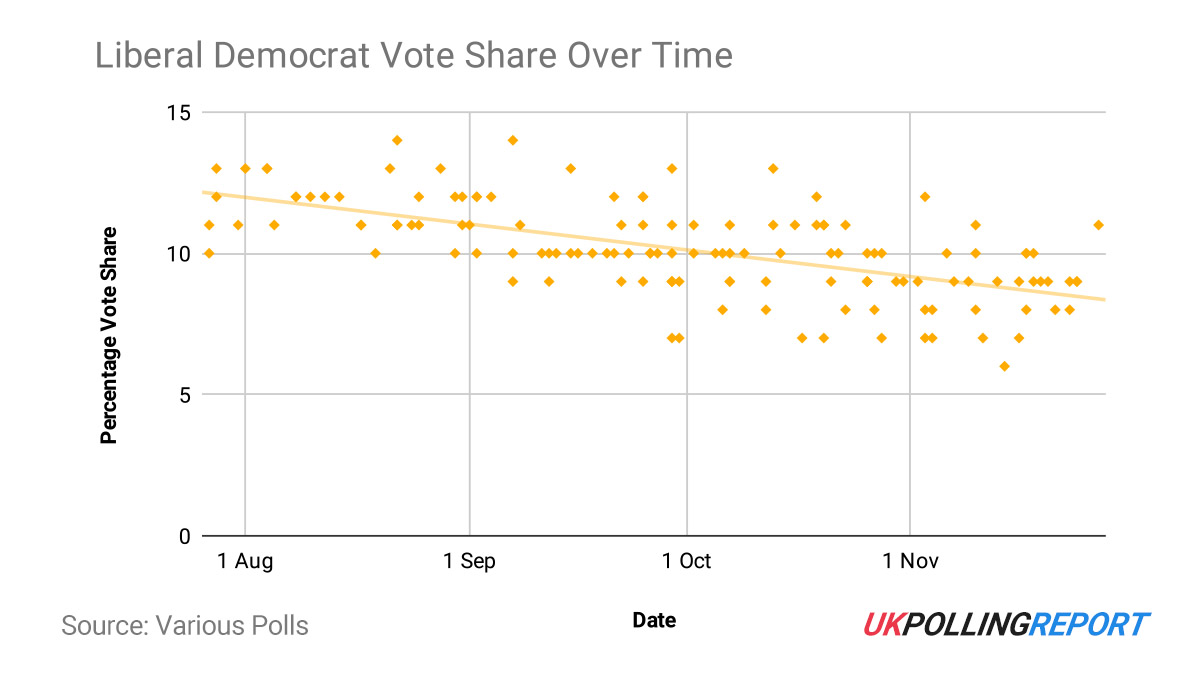
In the midst of a volatile polling landscape, one trend has flown somewhat under the radar. Despite the Conservatives' plummeting popularity, one expected beneficiary has been struggling to make headway as Liberal Democrat numbers have entered a steady decline. This is apparent if their various vote share results are plotted over time.
The trend appears worrying for the Liberal Democrats. It's left many wondering what's gone wrong and how it can be rectified.
An obvious answer for the party might be to re-focus on Brexit. The issue seems back in vogue amongst the media, with polls suggesting voters regret the current state of EU relations. Meanwhile, Lord Ashcroft's polling highlighted that the issue is the most important in determining Liberal Democrat likelihood to vote, with their supporters ranking it as the factor most responsible for the state of the economy. It could certainly be a way to shore up their core support.
However, the party has remained somewhat lukewarm on the issue. This perhaps hints to a broader strategy which explains why the party might not be overly concerned with the state of polls.
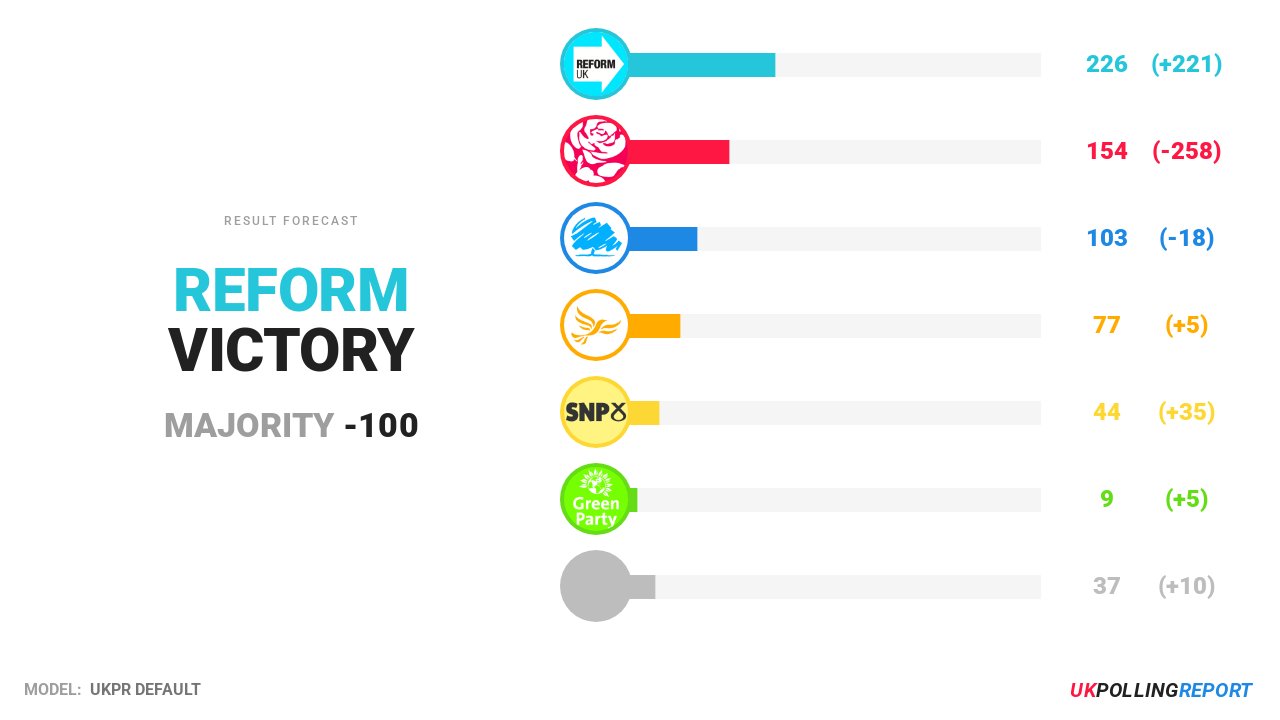
Taking a look at our seat predictions, despite losing votes, the Liberal Democrats are set to gain 13 seats. This seems counterintuitive, though arises from the fact many of their targets are Con-Lib marginals. Whilst the Lib Dems are hardly riding high, the Conservatives' plummeting polls gives a decent swing to their column.
While many voters do regret Brexit, more don't want it re-opened as an issue. In Lord Ashcroft's polling those saying "The UK needs to accept that it has left the European Union for good and should try to make the best of Brexit" led by 6% over those seeking to re-join some EU institutions. By steering clear of the issue, the Lib Dems may well be trying to avoid alienating potential Conservative switchers.
A similar strategy could be in place over housing. Young voters have historically been an important element of Liberal Democrat support, yet on this issue the Liberal Democrats are challenging the Conservatives for their "over-development". It certainly seems a pitch aimed more for the home counties than aspiring homeowners.
There is some evidence of this approach in YouGov's most recent Westminster poll. The Liberal Democrats can only count on the support of 6% of 18-24 year-olds, less than their figure in any other age group. A third of their supporters who record a vote in 2016 also backed Brexit. This number was around a quarter in July. Meanwhile, as their headline support dropped from 13% to 9% over the period, amongst voters in the "Rest of South" this was far less pronounced. In late July they tallied 15%, now they're on 14.
In this way the Liberal Democrats may be learning lessons from 2019 where, after leaning heavily on Brexit, the party were able to gain votes and yet lost one seat overall. Whilst broad public support is no doubt a welcome bonus, under first-past-the-post, it's not the determining factor for electoral success. And although Lib Dems will of course want to stop their steady decline, they may well be practising caution to protect strategic priorities.