Westminster polls and the European elections

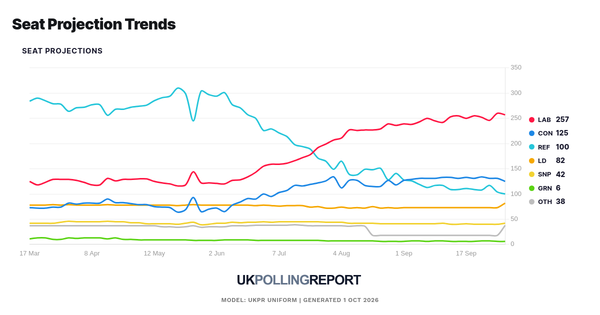
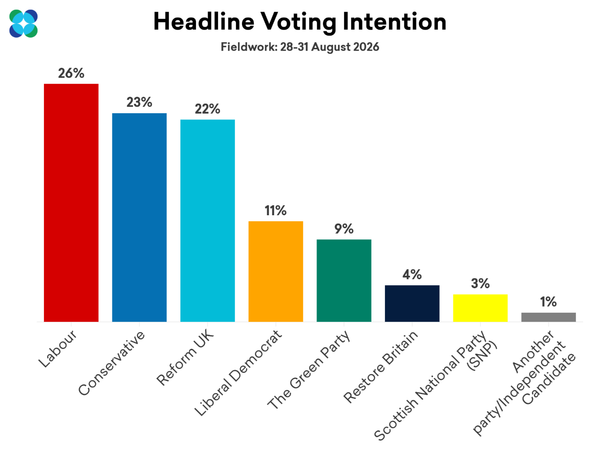
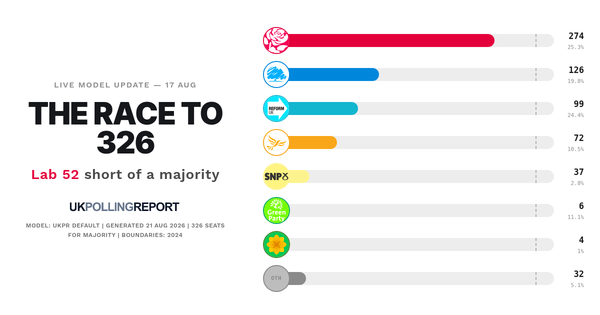
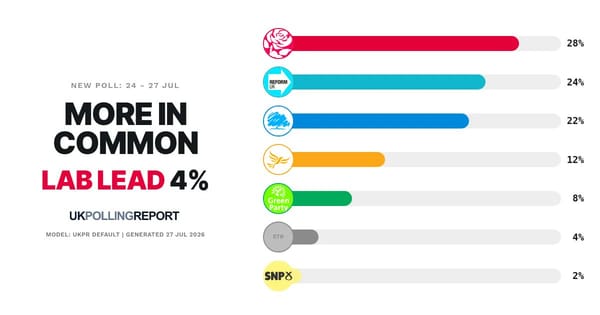
We've had a couple of weeks to digest the European elections now, and it looks as if the polls since then have been showing a slightly increased Labour lead. I've done a graph below of the last few months of polls - in order to remove any variation from irregularly or infrequently published polls the graph below shows voting intention in just YouGov and Populus polls - the two most regularly published polls. I've used a seven poll average, as it means (bank holidays aside) every data point is made up of 5 YouGov polls and 2 Populus polls giving us a nice steady figure.
Looking at the parties one by one, there's an obvious downwards trend in Labour support, interrupted by the aftermath of the European elections, since when they seem to have enjoyed a minor lift in support. Conservative support wiggles about a bit, but there is no definite trend. UKIP support rises in the run up to the European election, but fades as they actually approach (perhaps the impact of the widespread accusations of racism, perhaps just random variation) before increasing in the aftermath of the elections. The Liberal Democrats are steady, but have perhaps faltered since the European campaign. Finally there is an obvious upwards trend in the previously steady level of support for the Green party.
The question of course is whether any of this will have any long term impact whatsoever, or is the merely the impact of the publicity and campaigning around the European elections. After the local elections last year we got a spike in UKIP support, which by July settled down again. We need to wait a couple of weeks and see if all the apparent changes in party support over the last couple of weeks revert back to the trends they were showing before May, or if they've had any longer lasting impact.
Meanwhile tonight's YouGov poll for the Sun has topline figures of CON 35%, LAB 37%, LD 8%, UKIP 12%. A lower Labour lead than the last few polls, but nothing yet that couldn't be normal sample variation.