Voters Want More Homes to Be Built... Yet Even Young Voters Aren't Keen on Developing the Green Belt
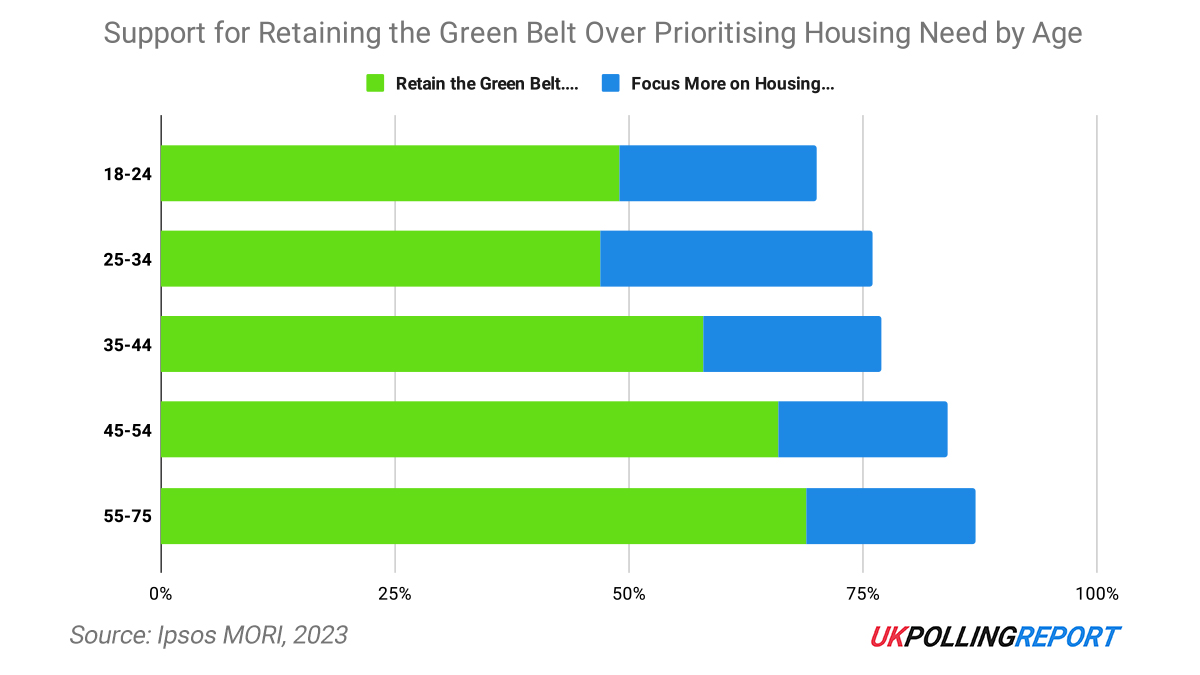
Although British voters overwhelmingly agree that housing is unaffordable, by a margin of 55% to 22%, and generally want more homes need to be built, by 45% to 27%, there is strong support for retaining the green belt "even if it restricts the country's ability to meet housing needs".
Six in ten voters agree with the phrase "we need to retain the current Green Belt, even if it restricts the country's ability to meet housing needs" over the alternative, supported by 21%, that "We need to place more focus on meeting the country’s housing needs, even if this comes at the expense of some Green Belt land". This pattern was persistent across all age groups, housing tenure, party affiliation and support for building more homes - though the magnitude of support did vary by group.
Although younger voters were more likely to prioritise a focus on housing than older voters, they were overwhelmingly supportive of retaining the green belt - despite what might be perceived to be in their interests. As previously covered, there are a number of things that could explain this.
Despite a common desire to a) make housing more affordable and b) build more housing, whenever the green belt is mentioned, support for development drops. This, firstly, suggests that a large number of voters place importance on the value of green belt, and of preventing urban sprawl, however it could also point to the power of the branding of the policy. What's more, the above patterns may be exaggerated by the fact that young voters tend to be less politically engaged, which might mean they're less aware of housing policy or its personal impact on them. This explanation is lent support by the fact that the response rate to this question is correlated with age.
When responses are broken down by housing tenure, unsurprisingly, support for building does polarise more - though only slightly.
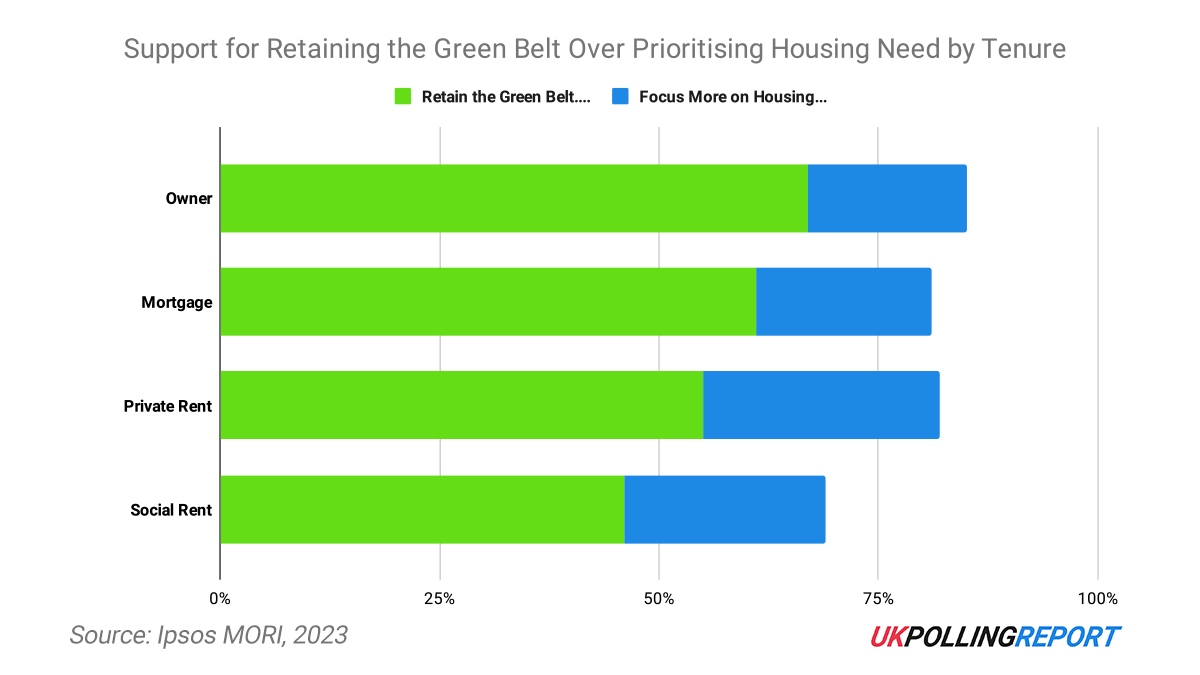
Voters who outright own their homes support retaining the green belt by a net margin of +51 points, compared to +23 for social renters. This pattern likely occurs for the same reasons as mentioned above.
Building on the green belt is a rare Labour policy which seems to contradict public opinion, and going by the polling there are some insights into how Starmer could sell his housing plan. Labour should focus on the imperative to build more homes and the affordability of housing. They might also want to avoid the term "green belt" by name...