Trans Debate Low on Voters' Priorities, Support Determined by Age
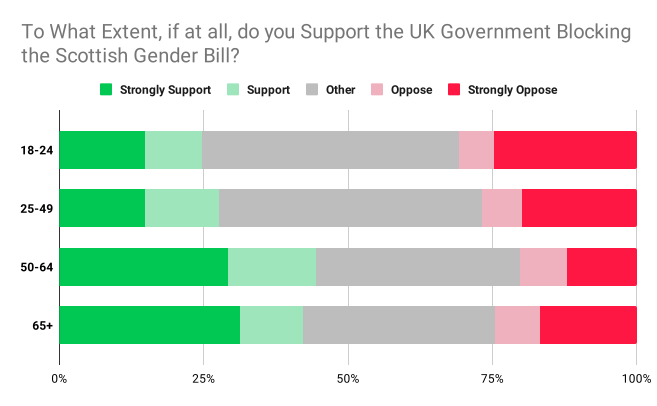
As British politics enters a frenzied state over Scotland's gender recognition reform, its constitutional implications and trans issues more generally, it's worth looking at what public opinion has to say on the matter. PeoplePolling have released a couple of questions today, both of which suggest opposition to Scotland's gender recognition reform bill. Though any discussion over public opinion on the issue of transgender rights needs one important caveat: voters don't really care.
More in Common conducted polling on the issue in 2022, as they included it in a typically formatted salience question. Of the 16 issues included, "the debate around transgender people" ranked least important. Just 2% of respondents included it as any of their top 3 issues. This won't come as a surprise to anybody who saw recent census data on the UK's trans population - out of the 45,700,000 people who responded to a question on gender identity, just 262,000 (0.5%) responded that they were trans.
Back to more recent polls and PeoplePolling today asked two questions on the topic. Firstly, they asked if it was right that the government blocked the bill - voters were split, with a small margin in favour of the Section 35 order. Secondly, they asked for responses to the statement “16-year-olds are too young to change their legally recognised gender.” - with which a solid majority (61%) agreed. It goes without saying that responses were strongly correlated with age - older voters are far more likely to support the UK Government's Section 35.
Considering how the debate is often framed, it is notable that women tend to be more supportive of the reforms than men. Whilst the high incidences of non-committal responses, 44% on the first question, further suggests trans issues aren't near the top of voters' priorities.
The broad findings corroborate prior polling from YouGov, conducted amongst Scottish voters in December, and from Redfield & Wilton (UK-wide) more recently. Both of which found consistent margins of opposition to the reforms in the bill. This seems to mark a shift from prior polling - conducted early last year, with Savanta finding 57% supported easing the process of legal transition. Though this can likely be explained by divergent framing, the impact of increased media attention and even in that poll more opposed legal transition for 16-18 year-olds than supported it.
How this shifts public opinion in Scotland is another matter. It's unlikely gender recognition reform itself will lose them many voters, due to its low salience, whilst the UK Government's action is more likely to crystallise support - this could occur in multiple directions. There is perhaps one solid lesson to take from the discussion - The Scottish Daily Express provided a prime example of how not to cover opinion polling.