No Popular Options for Hunt's Autumn Statement
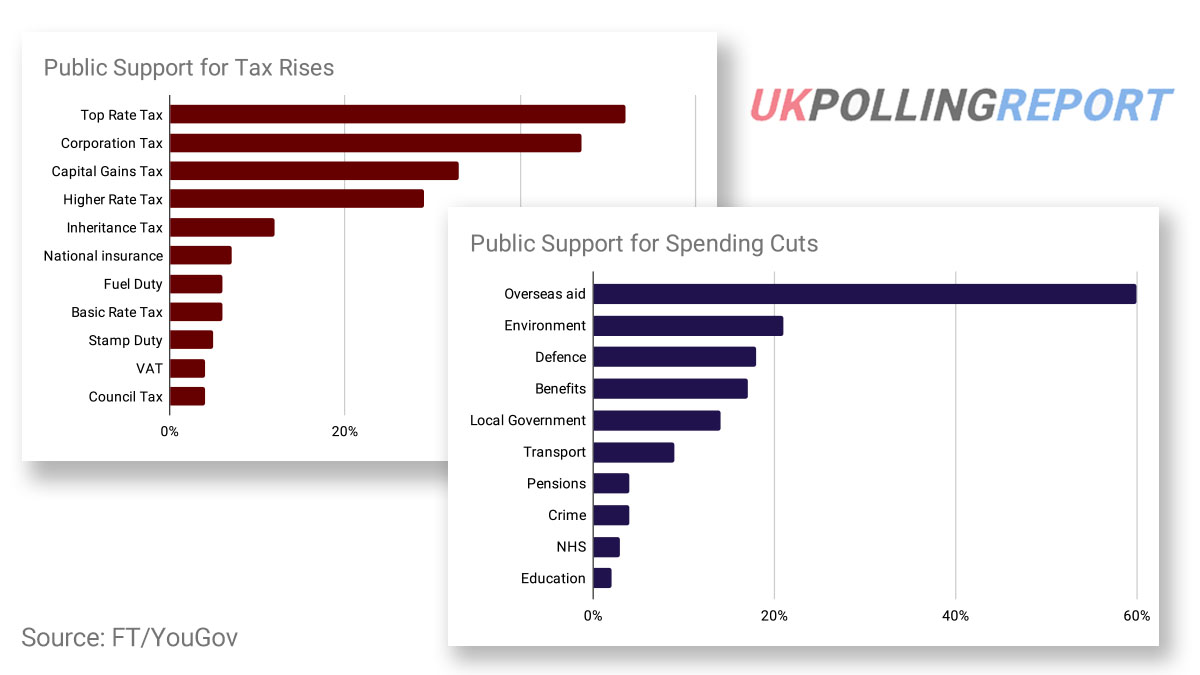
As Jeremy Hunt prepares to deliver his Autumn Statement, it's worth considering where public opinion stands on the economy. The FT covered YouGov data on where the public stands across a variety of tax and spend issues. One takeaway is that few individual contractionary measures receive overwhelming support. Only cuts to overseas aid and a rise to the top rate of tax are backed by a majority.
The most popular options for spending cuts are all services the public may have limited interaction with. Naturally foreign aid and defence spending will be felt predominantly overseas, whilst environment funding is a small portion of public spending, likely spread across a number of sectors. This can be contrasted to the least popular options: including the NHS, education and crime; which are predominantly "street-level" public services.
The support for Overseas aid comes disproportionately from Conservative voters, with 82% supporting it, compared to Defence which is more favoured by Labour voters. The only other cuts Labour voters prefer to Tories are on pensions and crime. Whilst crime could be accounted for by social values, perhaps the support from pensions stems from the disproportionately older makeup of Conservative voters.
Similarly, the most popular forms of tax rises are those which fall on smaller sections of society. Capital gains and the top rate of income tax are both paid by around 1% of the population, whilst corporation tax is rarely paid by voters themselves. It makes sense the public is more content to see these numbers go up.
The fact public sentiment seems driven by the tangible practical impact, rather than a theoretical ideal, perhaps explains why Hunt is said to be mulling a freeze to tax bands. By keeping income brackets the same, whilst inflation remains at double-digit levels, the Treasury can bring thousands of new voters into paying more. This fiscal drag could raise £10 billion per year until 2028. However, whilst voters may not articulate opposition to such stealth taxes, their potential impact should not be dismissed. If by paying more, people feel worse off, this could contribute to a more generalised negative sentiment towards the government down the line. The fact these effects are more difficult to measure directly doesn't mean they don't exist.
There is no easy fix for Jeremy Hunt's £50 billion fiscal hole.
In addition to this challenge, Hunt himself will be hard-pressed to emerge in a positive light considering the state of opinion beforehand. Ipsos has released polling suggesting just 7% describe the economy as in a good state. 89% think it's poor. Meanwhile Jeremy Hunt gets a net score of -12% on whether he's doing a good job.
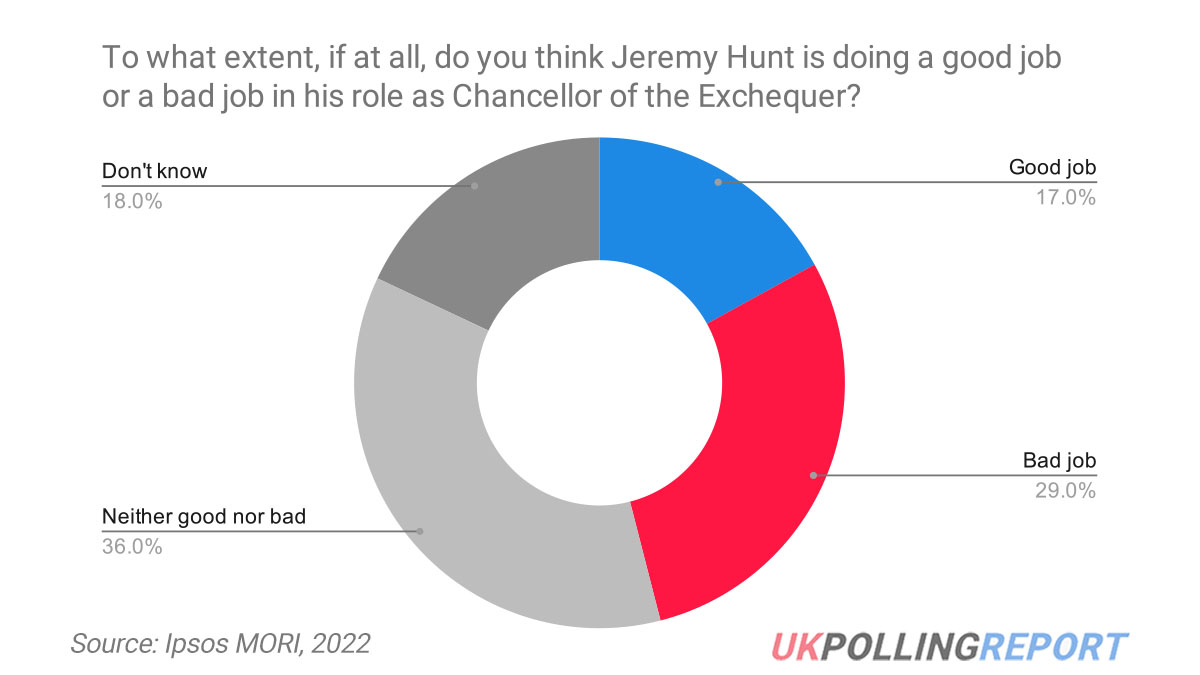
He will be hoping the 18% of "don't know" respondents and the 36% who remained non-committal will be persuadable. However, considering the above polling which suggests most contractionary measures are unpopular, it doesn't look good for the chancellor.
Whilst Rishi is personally trusted on the economy, this has not rubbed off on the Conservative Party, nor on Hunt. In an event where the Chancellor will be taking centre-stage, it will be interesting to see how the situation evolves.