Replacing Nicola Sturgeon a More Pressing Challenge for SNP than Current Polling
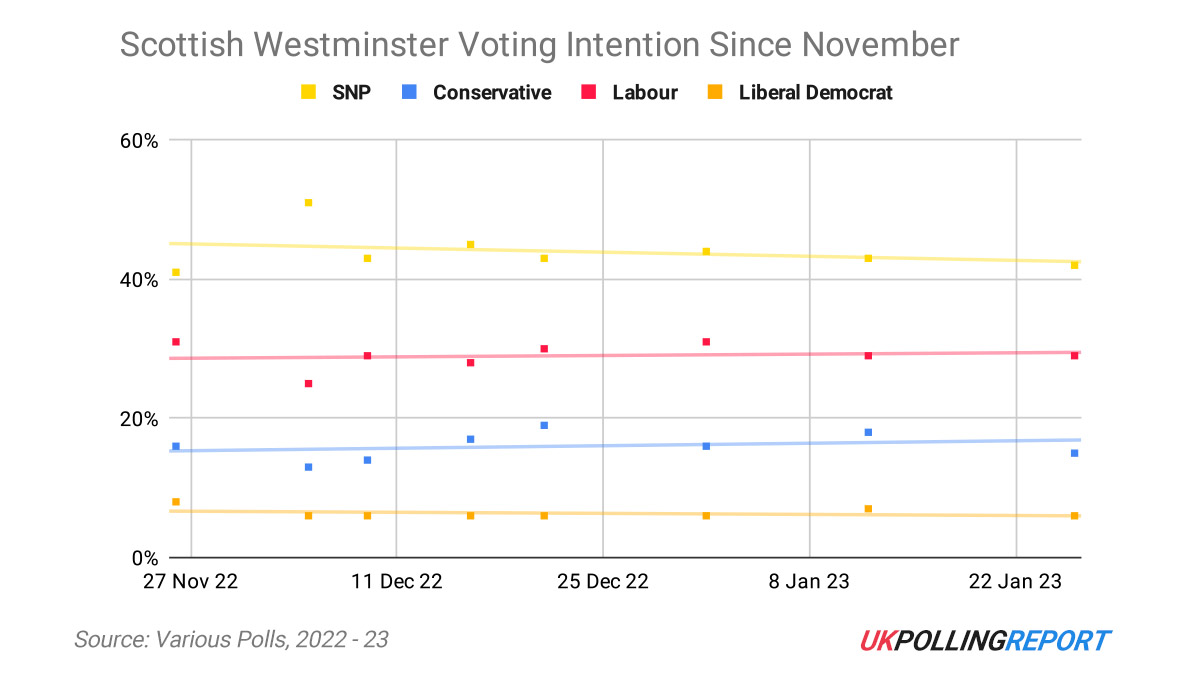
In the wake of Nicola Sturgeon's surprise resignation, commentary has been quick to circle on the declining fortunes of Sturgeon, independence and the SNP in polls. Whilst the party has certainly had a tough time of late, the evidence behind these headlines is hardly conclusive as yet. What's more, it's clear that Sturgeon is still a popular, albeit polarising, figure. As the race to decide her successor warms up, the frontrunners: (narrowly) Kate Forbes according to one poll, and Angus Robertson according to the betting markets, are both relative unknowns.
Polling on independence, at least since Holyrood passed gender recognition reform and the UK Government invokes Section 35, is hardly overwhelming. YouGov presents the most concrete evidence of a switch in favour of independence - they've produced a 6% swing from "Yes" to "No" between early December and late January - with "No" more recently seeing a margin of 6%. Polling from Lord Ashcroft also suggests "No" now maintains a significant lead.
However, these are just two polls and - despite the agreement over headline findings - they differ significantly in the margin. The story is further complicated when FindOutNow is taken into consideration - as other pollsters find margins against independence, they're reporting a "Yes" lead of 8%. Although FindOutNow does tend to report a higher independence vote share than other pollsters, possibly due to the makeup of their panel, this lead has not shifted between December and January - casting doubt on evidence of a major shift.
Considering the sheer magnitude of the swing reported by YouGov, over just one poll, and the relatively sparse field of polling, it should introduce some caution into claims of a decisive swing to "No".
To further cloud the narrative of swing away from independence - SNP support has remained relatively consistent. Both YouGov and Survation took polls in both December and January, and both report a decline in Westminster SNP vote share of just 1% (for YouGov it was a larger 6% in Holyrood. Though again, the SNP maintains a large lead).
Out of all Westminster polling since November, the smallest SNP lead came in a poll from Redfield & Wilton - at 10%. That was from 26th - 27th of November, before public debate became consumed by gender reform.
Whoever takes over for the SNP will inherit a polling situation far less catastrophic than headlines imply. Evidence of a "No" lead is real, though it's possibly overstated as the SNP remains the most popular party in Scotland by a double-digit margin.
Even recently, and despite some evidence of a decline, Sturgeon remains in high standing amongst large sections of the Scottish electorate, certainly relative to other politicians. As no clear SNP successor is yet apparent, the more pressing matter for the SNP is not the current state of independence polling. It's how the party can move on from a leader so ubiquitous and electorally successful as Sturgeon.