The State of Polling as Rishi Sunak Becomes PM
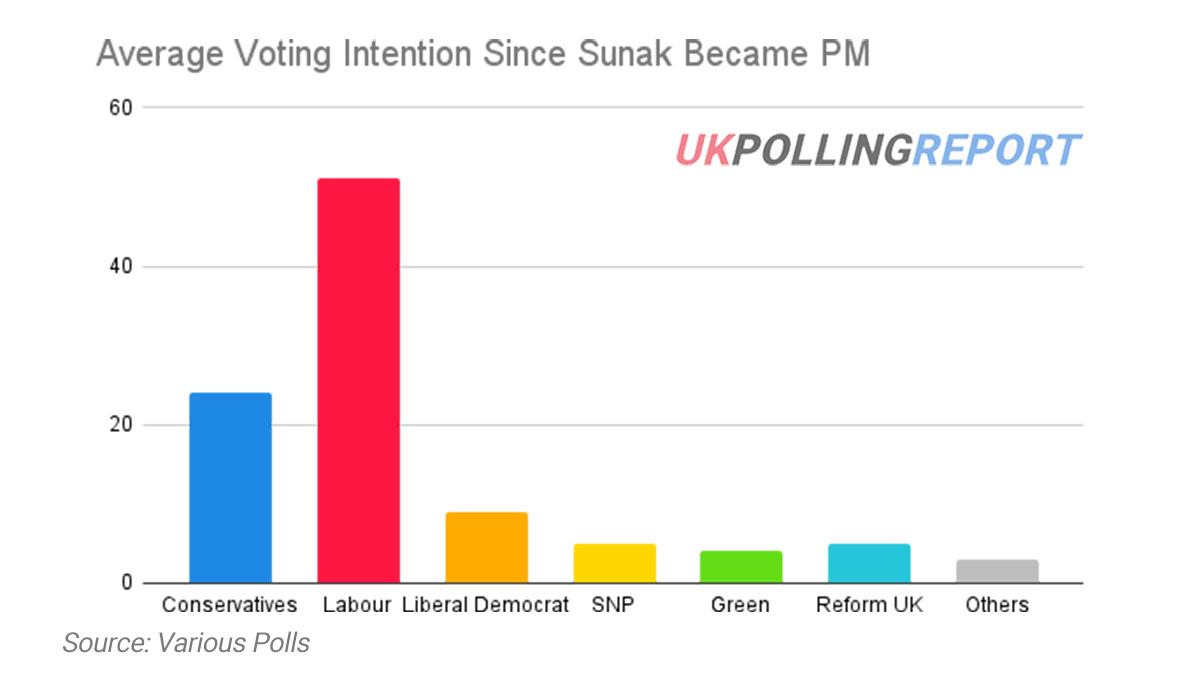
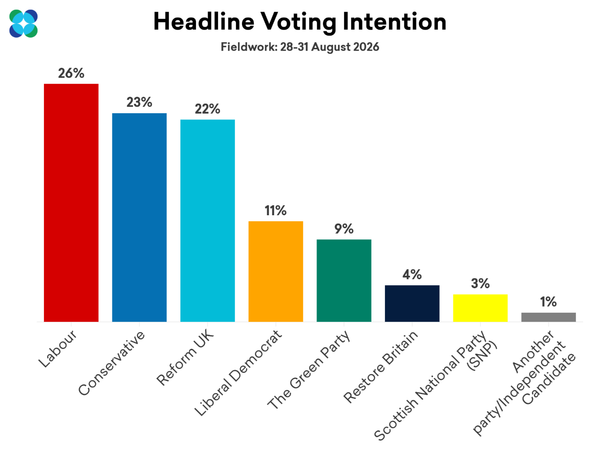
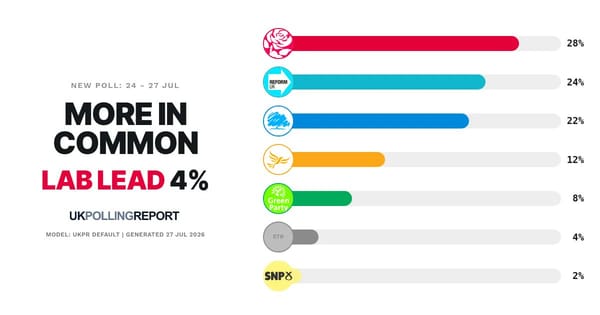
The first polling since Rishi became Prime Minister provides a fairly coherent picture of public opinion. Labour maintain a significant lead over the Conservatives, in the region of the mid twenties. Polls suggest Labour’s support sits at just above 50%, whilst estimates for the Conservatives centre around 24%.
Both parties will be able to take something from these results. Labour maintains a large lead, whilst The Conservative have been able to make significant in-roads into it since Rishi Sunak became Prime Minister. Opinium gives the largest shift since Sunak, it suggests the Tories’ polling deficit has reduced by 11%. Perhaps this could arise from the fact it was conducted most recently.
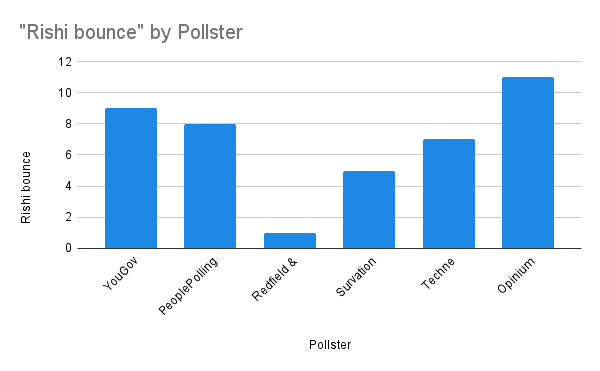
Redfield & Wilton’s 1% seems meagre. Though this can be explained by the date from which the comparisons are made. According to Redfield, the Labour lead decreased by 1% since the 23rd October, though when taken with the 3% decrease on the 19th, it would give a far more comparable 4%.
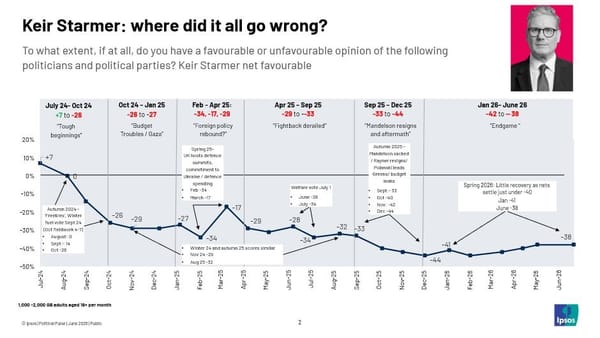
The results seem, in large part, down to Sunak’s personal approval. The Prime Minister is more popular than Liz Truss when she took over, and much more so than when she left office.Yet despite this, the Conservatives’ poll ratings are far lower now than when Liz became Prime Minister. This seems to suggest her premiership has dealt lasting damage to the party’s perception. CCHQ will be hoping it can be undone as quickly as it was inflicted.
Diving into the tables for YouGov’s most recent poll can reinforce this point. Currently 14% of Conservative 2019 voters intend to vote Labour at the next election, with 22% responding “Don’t Know”. That’s the same proportion of Con-Lab switchers as in Liz Truss’s worst YouGov poll and can be contrasted to the 9% she had as she took office.
Generally “don’t know” respondents are more likely to return to past voting behaviour than outright switchers. The amount of Con-Lab switchers, even after a “Rishi bounce”, suggests at least some of the voters lost so rapidly by Truss will not be as quick to return.
The challenge for Sunak is made more difficult as the party has seen 2019 voters swap to Reform UK too. PeoplePolling even gave them their joint highest ever result in a Westminster VI poll, at 8%. The motivations of a Con-Reform switcher will differ from that of a Con-Lab switcher, so presenting a unitary platform that would bring all voters back into the fold is a big ask.
The Conservative Party does seem to be addressing this. Sunak has emphasised his commitment to the 2019 manifesto and appears to be keeping one eye on socially conservative, economically moderate voters in other policy areas. Whether they can deliver, and if a strategy of regaining Johnson’s electoral coalition is even viable, remains to be seen.