Sunak's Five Pledges Set Him Up for Success
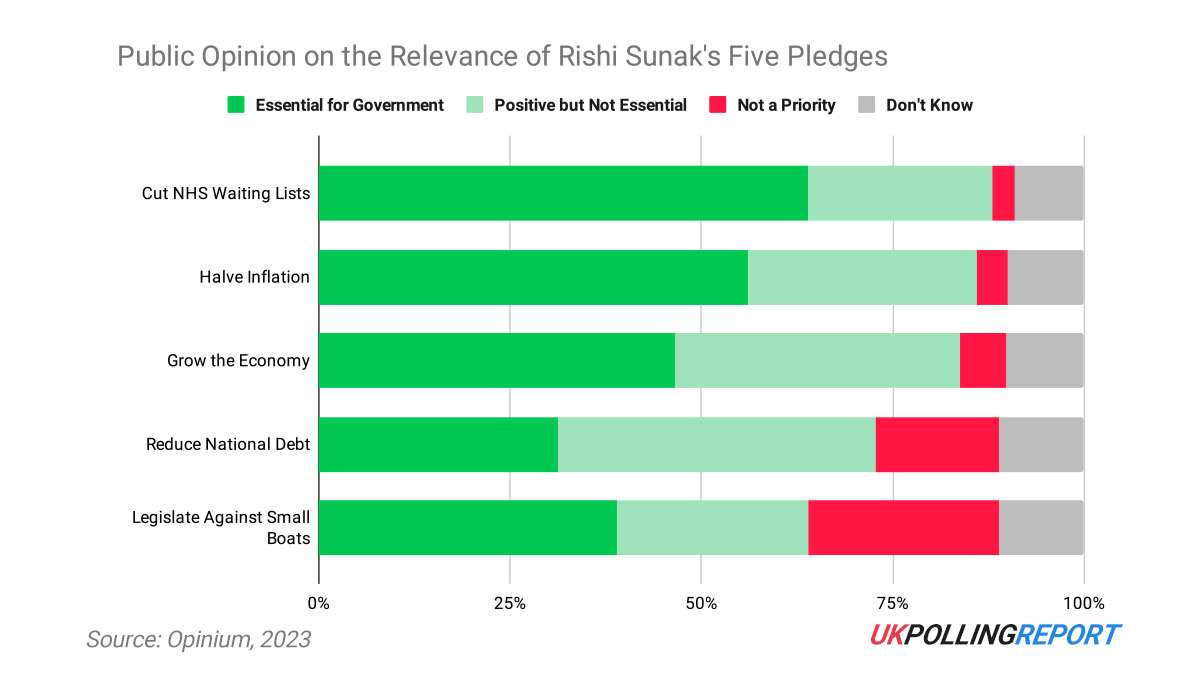
Opinium has released some polling that might shed some light on the public's political priorities. They first asked about the importance of each pledge in guiding views of government performance. Unsurprisingly - given how voters currently rank Britain's most important political issues - cutting NHS waiting lists, halving inflation and growing the economy come out top.
Reducing the national debt has the lowest proportion of those saying it is essential, and while more say that legislating against small boats is essential, it also has a higher proportion saying it's not a priority. This likely arises from the political polarisation of the issue: Labour voters consistently rank it as far less significant than Conservatives.
The broad finding is that the vast majority view each pledge as either essential or positive. This bodes well for Sunak and suggests they've been picked either well or deliberately. Sunak also won't be concerned with those saying immigration should not be a priority - most of those responding as such would be unlikely to support the Conservatives anyway.
Further questions only support these findings. Voters agree that the pledges are ambitious, despite the arguments to the contrary made by the Labour party. Even amongst current Labour voters, a significant majority says they're ambitious.
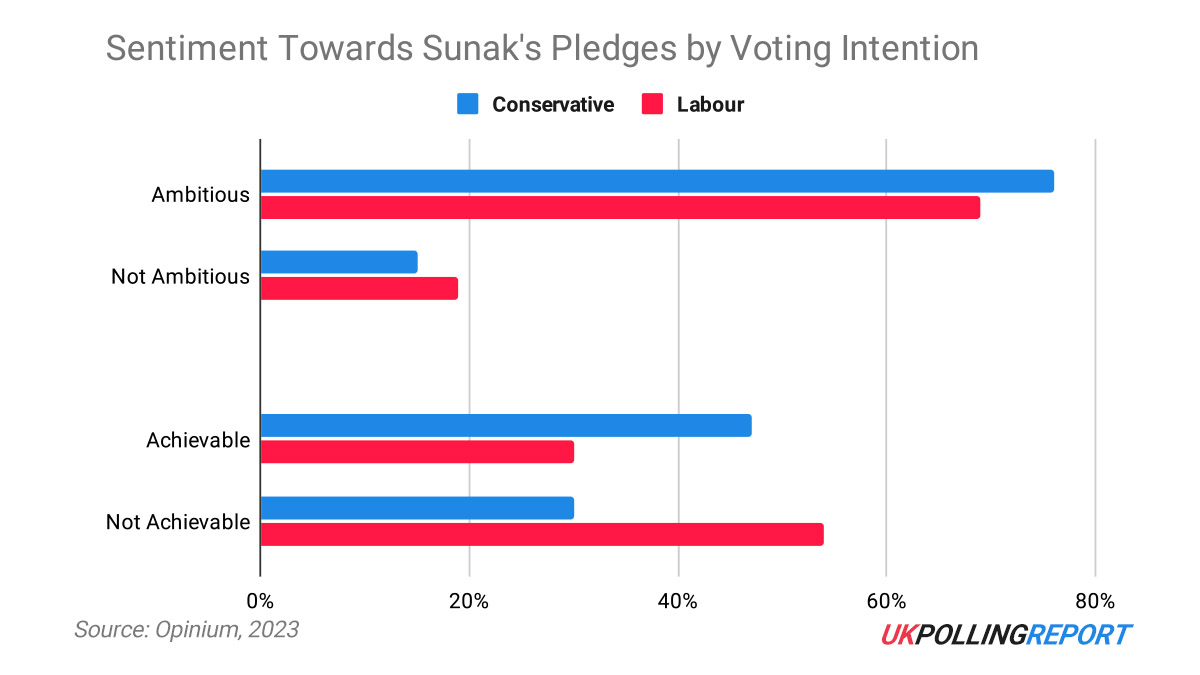
There is partisan polarisation on whether the pledges are achievable: Conservatives say they are, Labour supporters disagree. Although this likely stems from broader levels of confidence in the government, it isn't necessarily a negative for Sunak. The prospect of low expectations only helps his case if he can deliver.
The combination of voters agreeing the pledges are important; that they are ambitious; and that they might be difficult to achieve leaves Sunak in a strong position. His pledges are in touch with the priorities of voters and are sufficiently ambitious to be perceived as such, without being too difficult to deliver in practice. Whether Sunak can play his cards right, and then if this is enough to actually win over voters, remains to be seen. Either way, the pledges are clearly relevant to voters, so may well prove important in determining future perceptions of the government.