Starmer Fails to Inspire Despite Strong Labour Performance
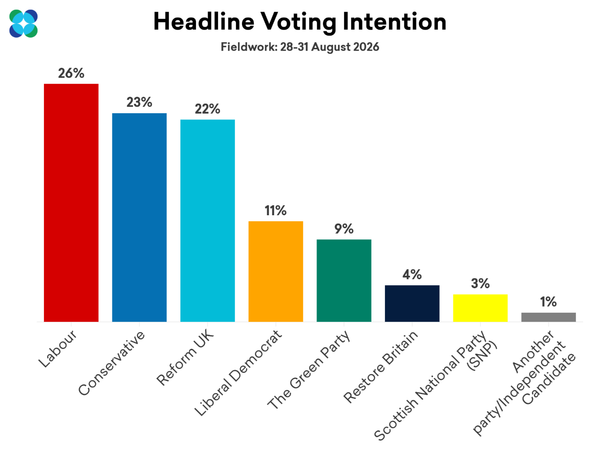
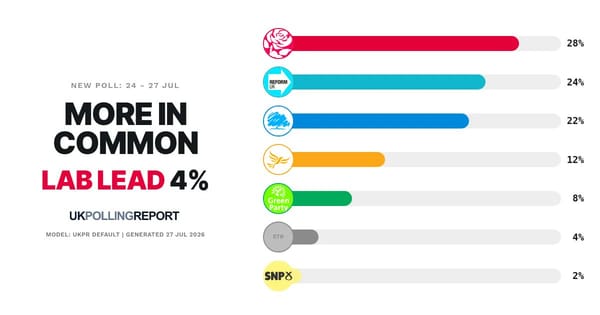
As the polling continues to paint a conflicted picture on national party shares, one particularly interesting piece from Ipsos MORI released yesterday only adds to this. They put Labour on 49% to the Conservatives 23%; a far cry from the 45% and 32% recorded by Deltapoll over the same fieldwork dates.
Whilst Ipsos is by no means alone with these figures, they could be explained by their methodology. Ipsos doesn't weight for past vote, based on valid concerns over false recall, and so can be subject to larger swings between polls. In this case they do slightly oversample self-reported 2019 Labour voters, which, if weighted for, might bring the result closer to their previous margin of a 21% Labour lead. Though the fact YouGov – who weight for historically-recorded past vote – find remarkably similar margins could caution against the conclusion that the result arises primarily from sample error.
Major party vote share isn't the only point of divergence for Ipsos MORI. They also put Reform UK on 2%, whilst the polling average is closer to 6%. Though in part this could be mitigated by the fact they also prompt for UKIP vote share, also registered at 2%, which certainly puts the pollster closer to other estimates.
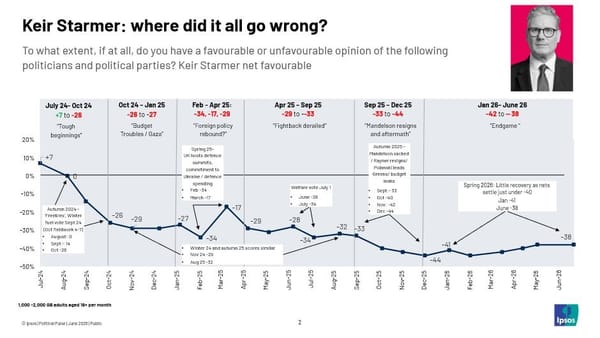
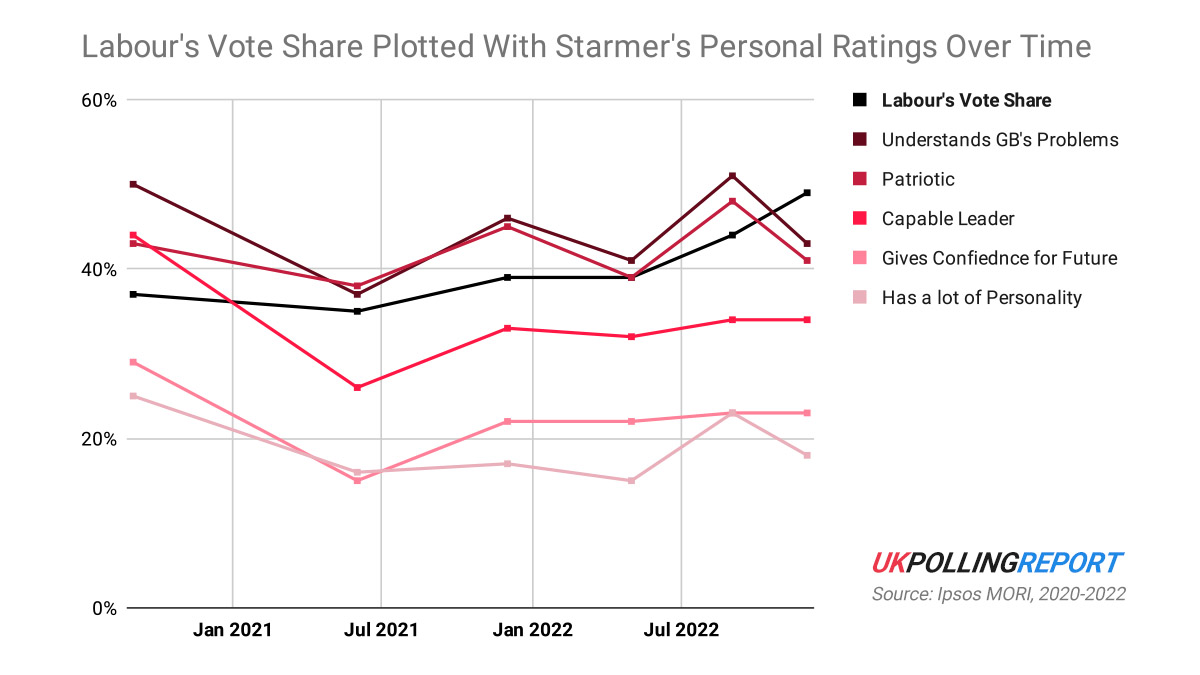
Looking into Ipsos' Political Monitor results over time does paint a thought-provoking picture of Keir Starmer's Labour leadership in particular. Despite significant gains in the polls for Labour since September, Starmer hasn't seen comparable personal improvements. This can be visualised by plotting Labour's vote share against his personal ratings.
Whilst over the past few years, Starmer's personal ratings had broadly moved in keeping with Labour's vote share, this link has been severed since September. Despite Labour's vote share gains, Starmer's personal polling has broadly remained constant or declined. This could suggest, as seems intuitive, that Labour's recent gains are built upon Conservative unpopularity, and in particular the damage done to the Conservative brand by Liz Truss's premiership.
The separation of personal and party ratings now seems to be a trend that extends to both leaders. Rishi Sunak is somewhat liked on a personal level, whilst the Conservative Party and the Government is viewed overwhelmingly unfavourably. How this dynamic plays out may well be important in determining party support in the coming months.
From the initial evidence it does seem as though Rishi's popularity had slightly helped government ratings initially, though his personal approval has since seen a comparable decline, perhaps from an inverse effect. Meanwhile, Labour is benefitting from the Government's unpopularity – Keir Starmer is not. This leaves a current picture where Labour's lead arises primarily from dissatisfaction with the status quo, rather than any message of their own. Whether this can be the basis of a such a large margin in the long-term, and then into an election, remains to be seen.