MRP Inconsistencies
The Multilevel Regression with Post-stratification (MRP) model is nowadays seen as the gold standard method in modern political forecasting. It typically uses large national samples, analysing data on a constituency-by-constituency basis, the MRP poll predicts specific electoral seat outcomes, indicating which candidates are likely to win or lose. It can indicate the end of a politician's career before official election results are announced. It gives us a clearer understanding of who will be in office.
Last week two of the UK’s leading polling companies, IPSOS and YouGov released MRP polls, both using national samples of approximately twenty thousand participants. The two polls have garnered a lot of media attention from their findings. When these two surveys are compared to each other the underlying weaknesses of MRP surveys become apparent.
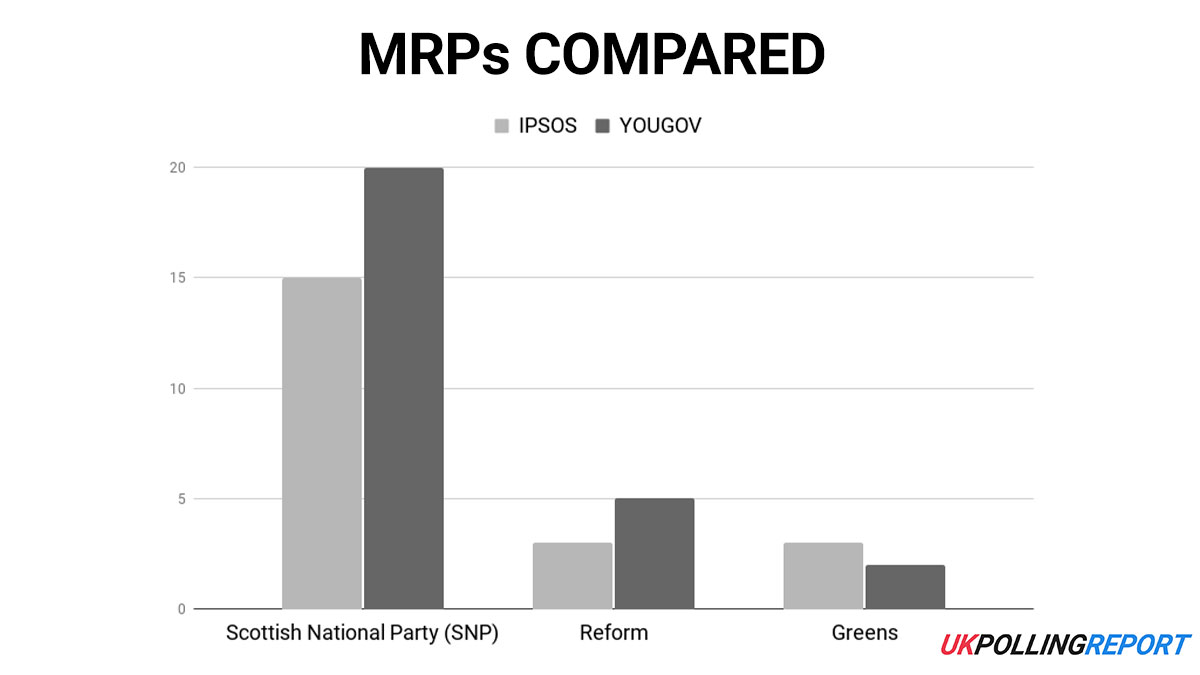
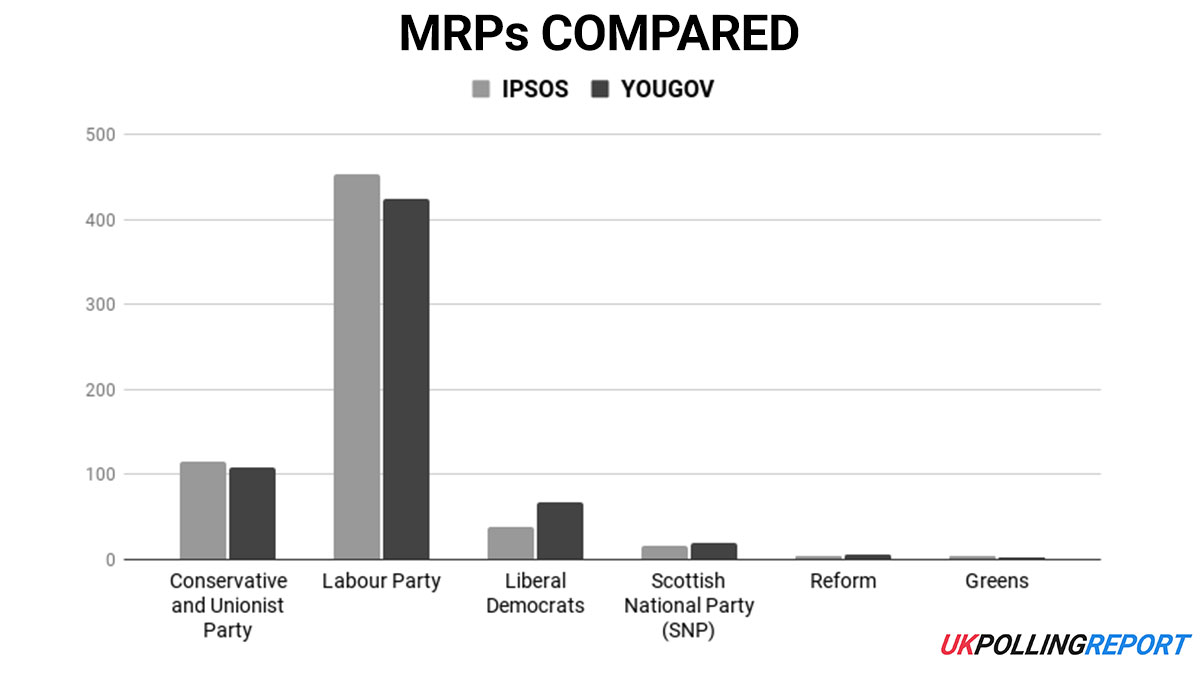
Unsurprisingly both Ipsos Mori and YouGov polls project a Labour landslide. The party is set to win 453 seats on the Ipsos Mori estimate and 425 seats according to YouGov, when we take a look at the small party and constituency-level findings, the projections differ greatly. There is a large difference in the findings with YouGov calculating that the SNP and Reform do far better than Ipsos expects.
The difference between the two pollsters is less pronounced for the two main parties.
In individual constituencies there is also a lot of variance; according to the Ipsos poll, Labour is on course to poll 56% in the Barnsley North constituency, with Reform getting 24% of the vote. When compared to YouGov’s polls the findings are very different. This area of South Yorkshire was one of the strongest supporters of the Brexit Party back in 2019, and YouGov has Labour only narrowly holding on in Barnsley North with 37% of the vote in comparison to 34% for Reform.
According to YouGov’s MRP, the Liberal Democrats are set to comfortably gain Tunbridge Wells with 40% of the vote compared to 31% for the Conservatives. Ipsos presents contrasting results, reckoning the Conservatives retain the seat on 35% with the Liberal Democrats polling just 22%, nearly half of the level presented by YouGov.
Ipsos found the Green Party to be ahead in their target seat of North Herefordshire, polling 36% of the vote in comparison to the Conservatives who lagged on on 30%. For YouGov the opposite is true, they project North Herefordshire will be easily held by the Conservatives who, at 34%, easily surpass the Greens. According to YouGov, the party is polling at little more than half Ipsos’ figure of 20%
According to Ipsos, Liz Truss will get 31% compared to 30% for Reform - effectively too close to call. Yet according to YouGov, it is Labour that poses the greatest threat to the former prime minister, with Liz Truss on 33%, Labour on 29%, and Reform on 25%. The MRP system is clearly sensitive to errors at a more granular level.