Lord Ashcroft's Polling Spells Trouble For Tories
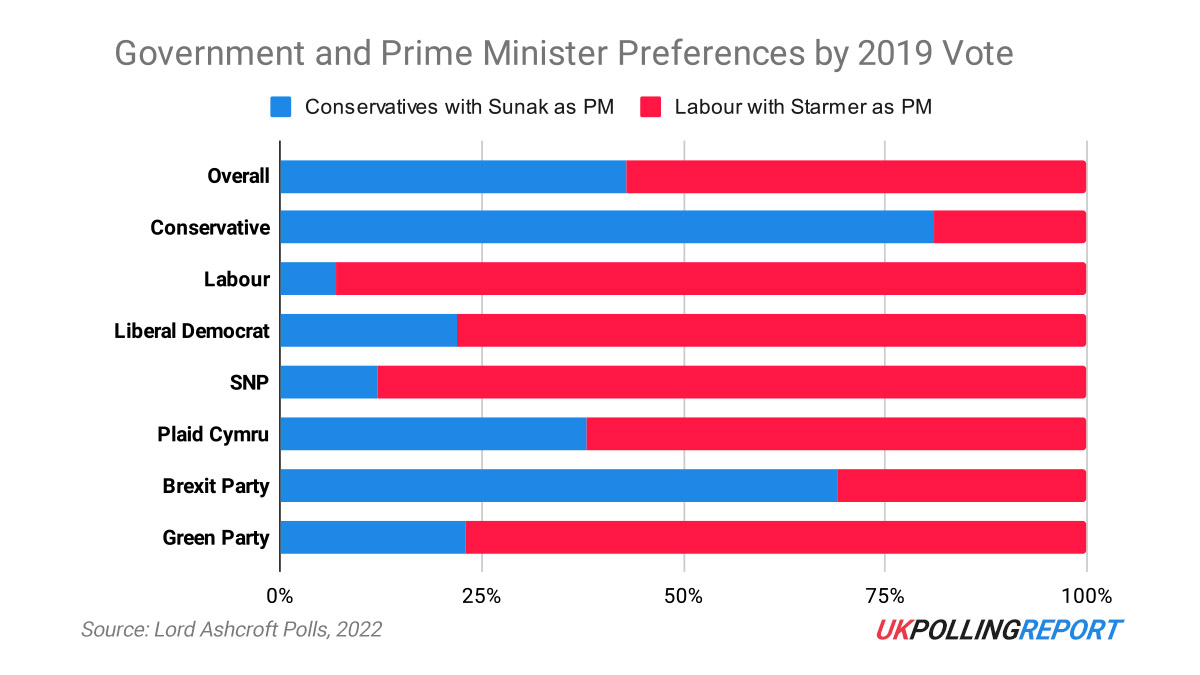
On Sunday, Lord Ashcroft published his aptly titled "They Think It's all Over" report and its headlines highlight what is clear to anybody who's read a poll over the past two months. The Conservative Party is struggling. The pollster surmised his report in the Mail on Sunday, as he made the scathing assertion that the Conservative brand is "in as bad a state as I have seen in all my years of polling". Digging down into the impeccably insightful and well-presented report only backs that up.
Amongst the findings that would cause most concern in 4 Matthew Parker Street are twin results that Labour are now seen as a party "ready to govern" and the Conservatives "need some time in opposition". Strikingly, 30% of 2019 Conservative voters even back a stint in opposition. These results are notable, not only for themselves, but for their symbolism. Readiness to govern is seen as a historically important determinant of election results, with Corbyn and Miliband failing to make leads on the question of "who would make the best Prime Minister?". In the most similar question to this in Ashcroft's poll, a Labour government led by Starmer was preferred to the Conservatives with Sunak by 14% .
Though the result that seems most troubling for Conservative prospects is their loss of trust on the economy. Economic credibility has long been a foundation of Conservative campaigns, and in an election where economic issues are set to be highly salient, this does not bode well for the party. The below graph demonstrates this by plotting each party's relative lead on issues against their importance to voters.
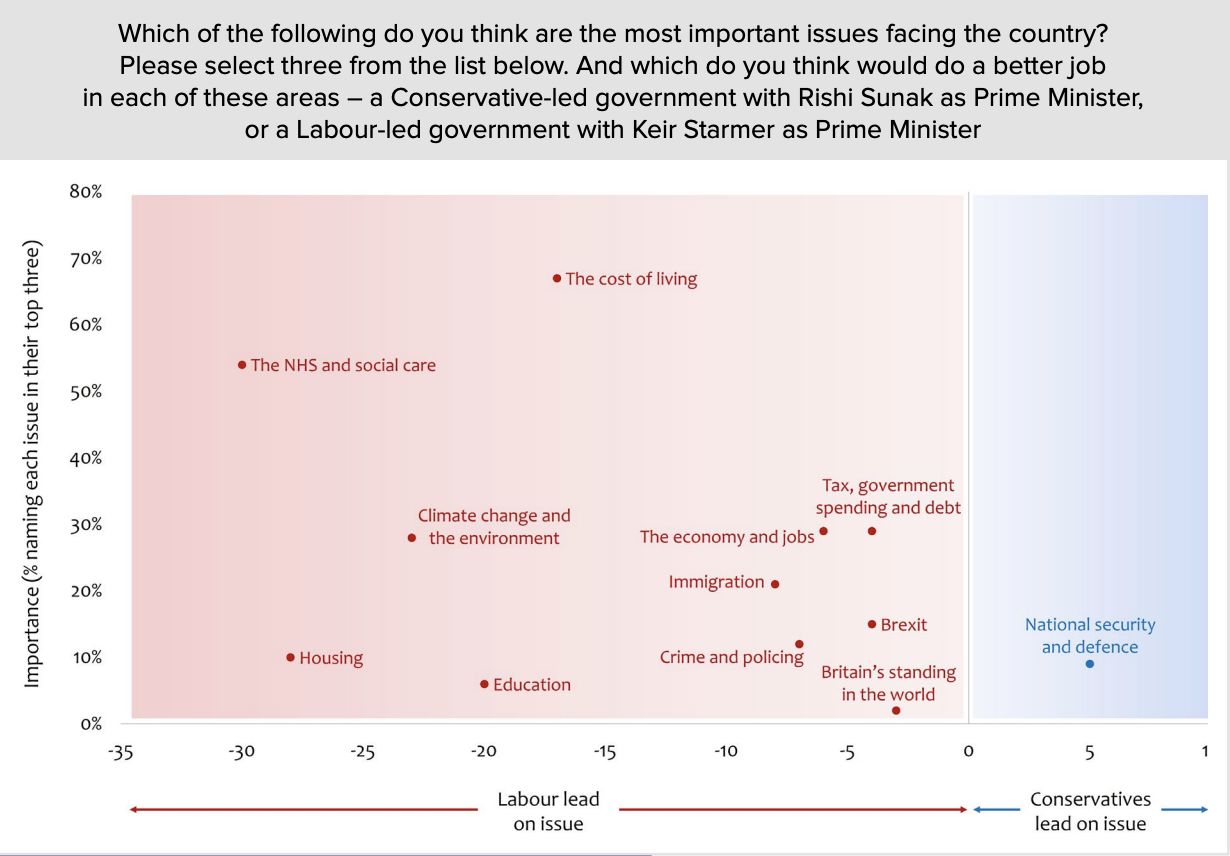
Labour's lead on "The cost of living" is perhaps most notable. Not only does Ashcroft find it as the most significant issue, Labour has a 17% lead. Whilst the Conservatives have also fallen behind on "Tax, government spending and debt" and "The economy and jobs". The polling finds the Conservatives lead on just one issue: National security and defence.
With polling as it is, it's difficult to avoid conceding to the sheer volume of evidence pointing to a Conservative wipe-out, however there are some silver linings for the party. Whilst their brand is tarnished, Labour isn't exactly enthusing the electorate. This is perhaps best encapsulated by the 58% who responded "Keir Starmer and Labour might not do a good job but they can hardly be worse than the government we have now". These outnumbered those saying "Keir Starmer and Labour would do a good job governing Britain" even amongst just current Labour voters. Perhaps indicating the gains they've made on 2019 arise from dissatisfaction with the government, rather than any pro-Labour groundswell.
Starmer himself is also not particularly popular. The top three words used to describe him are "Boring", "Labour" and "Unsure". Whilst Rishi didn't fare too much better, it adds strength to the broader conclusion that, on a personal level, the gap between Sunak and Starmer is far closer than that between the Conservatives and Labour. The presence of adjectives "Boring" and "Hindsight" could point to another positive for the Conservatives. Both have been key to lines of attack deployed by the party, perhaps emblematic of a successful political strategy over Starmer's tenure.
Despite this, the picture painted by Ashcroft's poll is overwhelmingly negative for the Tories. And whilst the relentlessly successful electioneering machine of the Conservative Party shouldn't be written-off, it's hard to see a clear path back under current circumstances.