Lessons From History: Could the Conservatives Escape Collapse?
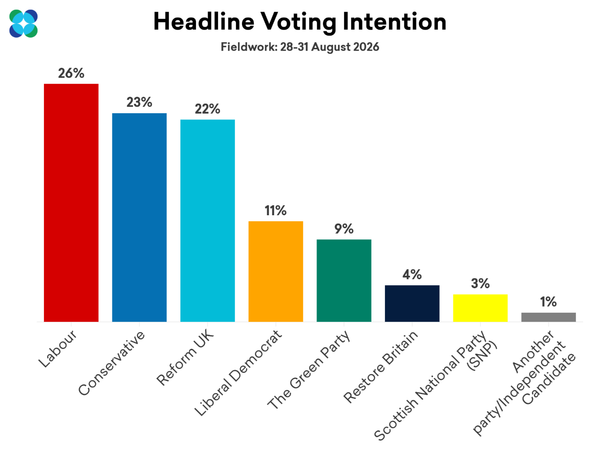
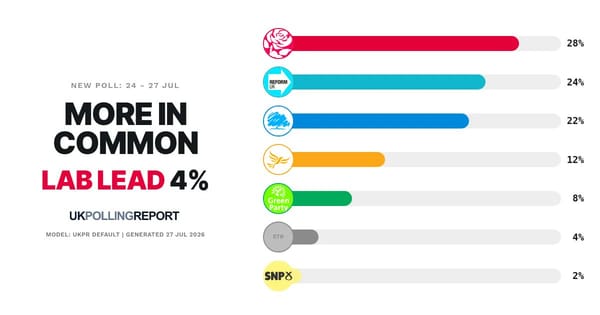
It would be an understatement to say Rishi Sunak has inherited a monumental task since taking over as Prime Minister. The country faces a myriad of economic challenges, driven by a war in Europe and exacerbated by the previous administration. Meanwhile, the Conservatives have been left in a similarly historic polling slump. Westminster voting intention polls are currently giving Labour an average lead of around 24%. To call it landslide territory would be an understatement.
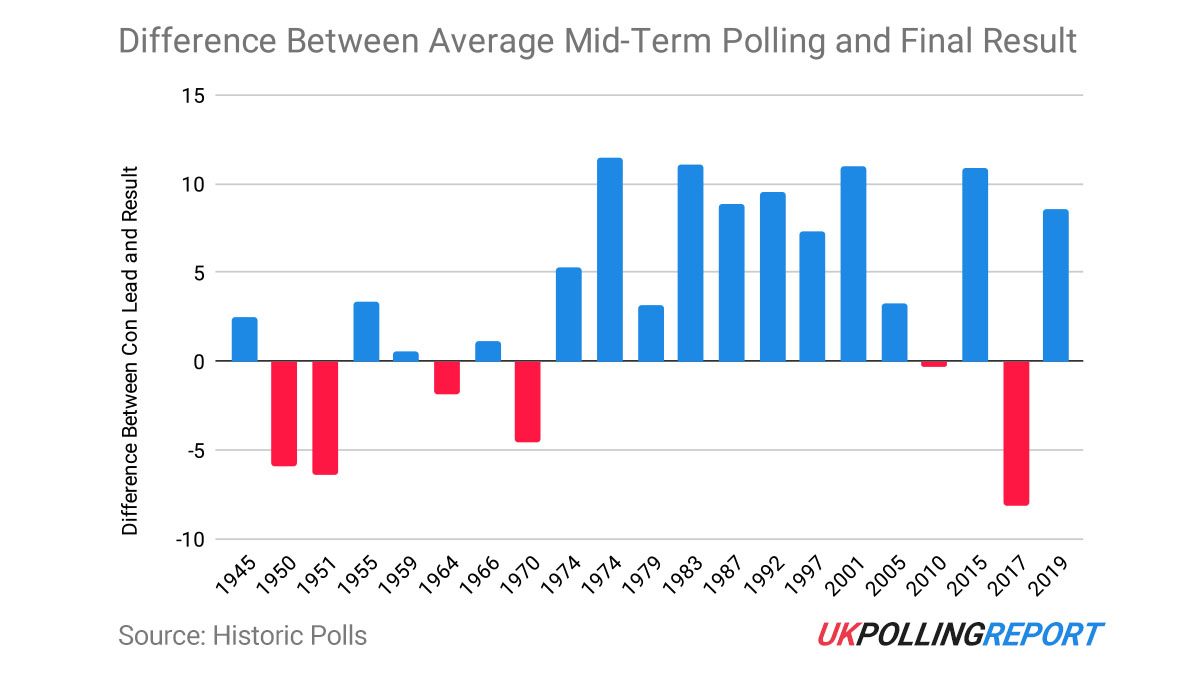
Whilst Conservative MPs will no doubt be dusting off their CV’s, there is some reason to suggest they shouldn’t all rush to the Jobcentre. Over long-term history, final election results often vary significantly from mid-term polling. As the below chart demonstrates, it is not uncommon to have double digit differences between average polling, over an entire term, and eventual general election results. In the second 1974 election, 1983, 2001 and 2015 the Conservatives outperformed average polling by over 10%. Current average mid-term polling would put the major parties level. Naturally, if smaller windows of polling are taken, rather than over an entire term, there would be greater variance in these figures.
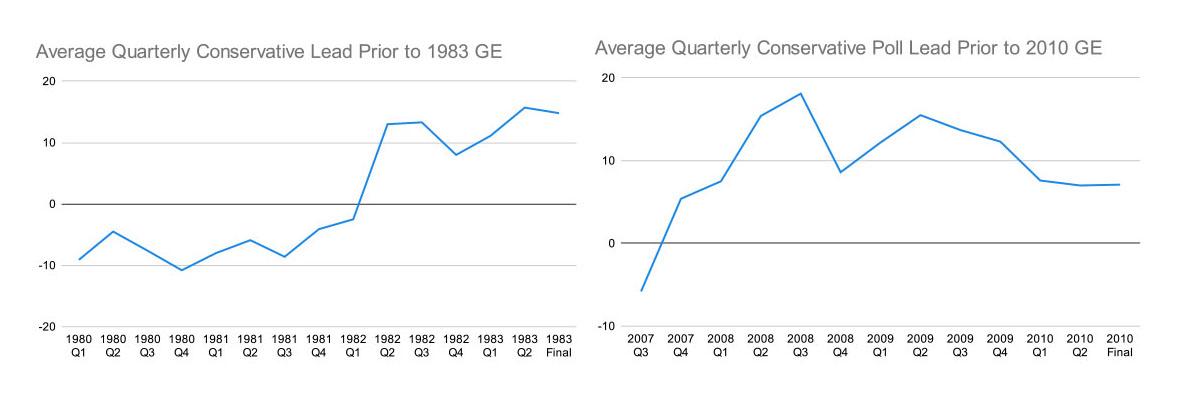
For specific historic parallels, Brown saw average poll leads in the high single digits after his ascension in 2007. Yet following the financial crisis, the Conservatives had polls giving them leads in the mid-twenties. The Conservatives went on to win the 2010 election, though not by the margin 2008 polling might have suggested. As for a comparison that might have appealed more to Liz Truss, in January of 1981 Labour had 11 double-digit leads over Thatcher in a row. In 1983 Thatcher won a landslide. A shift of similar proportions now would likely see a hung parliament.
The speed at which polls can move should be no surprise to followers of politics, even from the last two elections alone. In 2017 Labour closed the Conservative lead from an average of 19% in April to just 2.4% and the Conservatives’ 80 seat 2019 majority came off the back of polling in May having them in fourth place nationally.
Similar occurrences in the coming years are made more likely by the increasing volatility of the British electorate. Voters are less bound to party identities so polling can change more quickly now than ever.
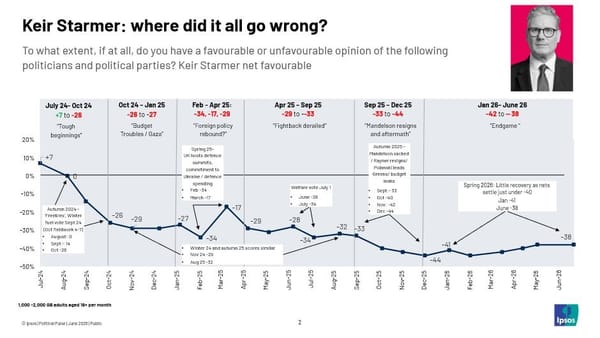
This is not to say the Conservatives will or even can stage a comeback. A lead of the magnitude Starmer currently has is unprecedented since Blair and the Conservatives have been in power for 12 years. If an election were held tomorrow, he would be the Prime Minister.
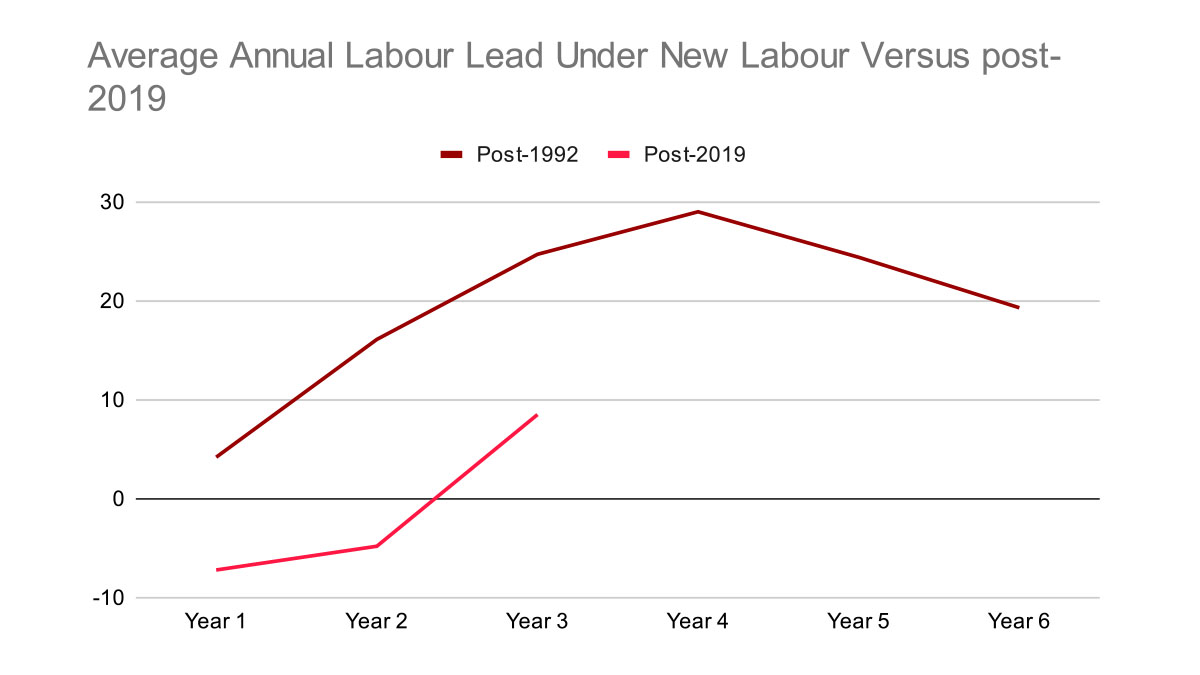
However, as much as there may be parallels between Starmer and Blair, it is worth highlighting we’re not yet in 1997 territory. Starmer has now been leading the polls for 12 months. New Labour held a larger lead for four times longer.
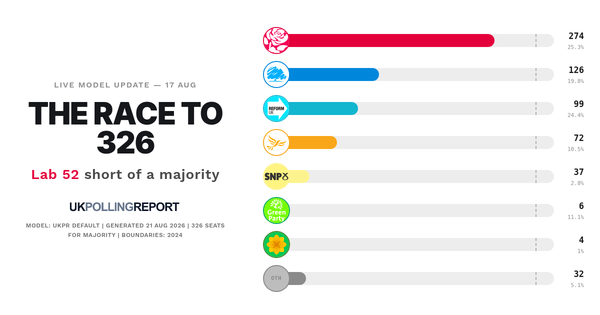
One lesson concerned Conservatives could take from polling is to seek to make the most of the institutional advantage to determine electoral timeframes, afforded by the repeal of the Fixed-term Parliaments Act. An election now would prove disastrous for the party, yet given two years, and the events that might unfold in the period, public opinion could shift materially. The Conservatives should avoid any efforts that might risk an election and try to restore electoral credibility. Although they might not be able to avoid defeat entirely, the margin is malleable. As has been shown by Conservative gains since Rishi became Prime Minister.
One final case study that could provide some much-lacking optimism to the Tory backbenches would be the difference between polling in spring 1990 and the 1992 election. Labour had seen leads in the mid to high twenties, all rendered redundant by the eventual 7.5% Conservative victory. The surprise election win followed 12 years of Conservative government, then the renewal in office of a new leader, despite economic turbulence. Crucially, Major was able to forestall an election until the electoral context was far more favourable.
Whether the Conservative parliamentary party is capable of avoiding an election for a year, let alone two, is questionable. Of course they will then also need to do something about the small issue of a 25 point polling deficit…