Labour has Diagnosed a Problem, Have They Found the Right Solution?
Reading through Labour's report by their Commission on the UK's Future, one message stands out from their polling. There is overwhelming pessimism and dissatisfaction in Britain's institutions and prospects. Luckily for us, the party has identified a solution in the form of a sweeping programme of high-level constitutional reform. Though, considering the depth of public sentiment, are these plans enough?
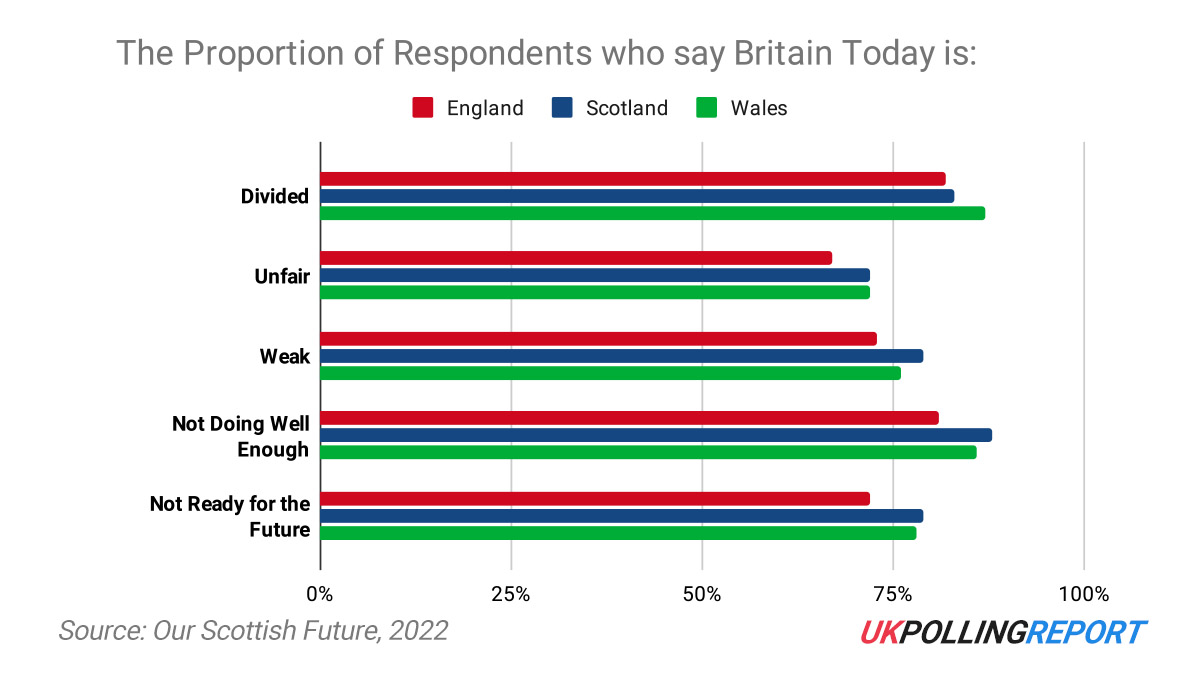
The evidence of such a lacklustre confidence in institutions is headlined early in the report, with voters across Scotland, England and Wales overwhelmingly agreeing that Britain is weak, divided, unfair, not ready for the future and should be doing better than it is today (that is over those applying the respective positive descriptors).
Similar trends are evidenced throughout the document. Voters don't feel good about their future economic prospects, they think Britain is underperforming against comparable countries, and most think the government is performing poorly across almost every policy area. Most strikingly is the proportion agreeing "We need radical change in how political power and public money are distributed in Britain". This constituted a majority amongst English Leavers and Remainers, Scottish Yes voters and Welsh voters as a whole. Scottish No supporters are the only group not in favour of radical change, though the fact this seems polarised based on independence support could suggest it was seen as a proxy for the issue by those surveyed.
It also is worth saying the alternative option in the question was "Any change we make to Britain’s political system should be careful and gradual". The emphasis on adjectives "careful" and "gradual" could suggest inaction or ineffectiveness, which might skew responses slightly. Even so, the public is clearly dissatisfied with their institutions and wants decisive change.
Labour's headline solutions are a House of Lords overhaul, local devolution and wider reform to Westminster. There is some evidence these measures might address concerns. When asked on levels of trust in different political actors, local councillors come out top in every British nation, with members of the Senedd and Scottish Parliament second in Wales and Scotland respectively. Members of the Lords came last and the Commons second last across all three nations. This does suggest that Labour's reform agenda is well-placed.
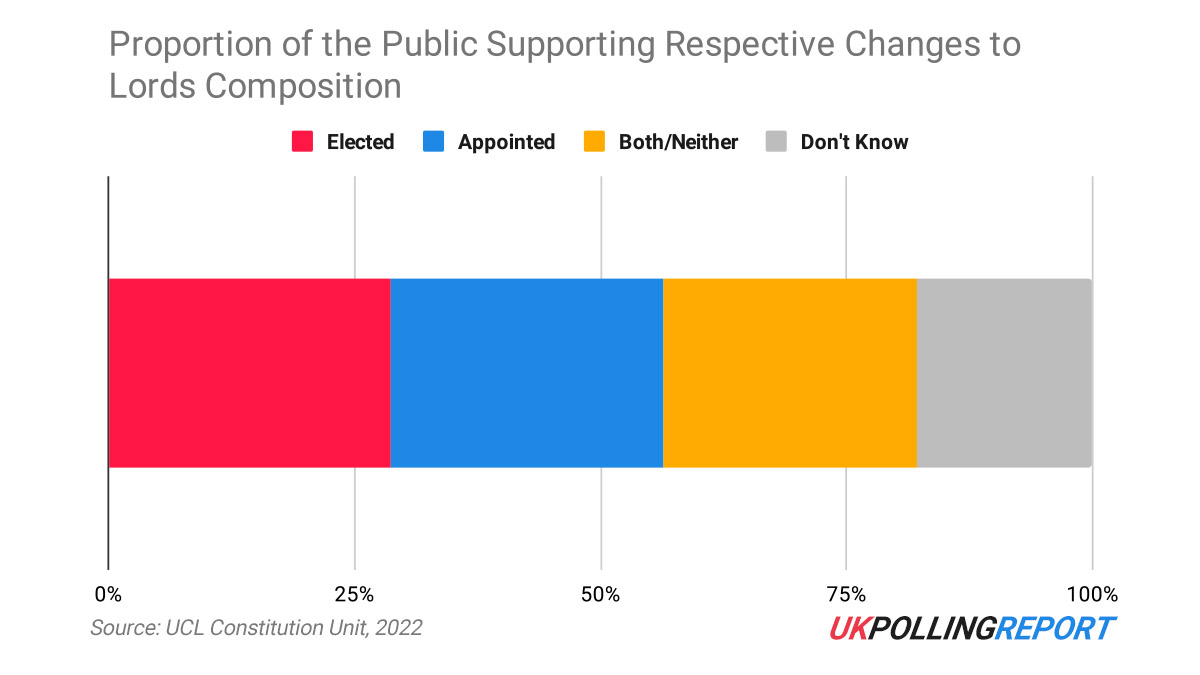
However, whether their solutions are popular is more questionable. Taking Lords reform specifically, polling for the UCL Constitution Unit found the British public had no concrete preference for reform to the make-up of the Lords. The public had a broadly even split, not strongly related to party affiliation, as well as a relatively high share of non-committal and "don't know" respondents. Whilst it's worth noting other specific elements of Labour's Lords reforms are popular (including preventing political appointments and abolishing hereditary peers), there is at least some public ambivalence towards an elected second chamber.
This aligns with the conventional wisdom that the British public is seldom animated by constitutional reform. A belief evidenced in the media response to Labour's announcement, which focused on the relevance in the context of a cost-of-living crisis. It was also recognised by Labour's own messaging, as they emphasised the economic benefits of their plans, rather than the reforms themselves. They are right to recognise that voters' key concerns are economic.
It's in this sense that Labour's proposals for constitutional reform are unlikely to determine the next election. Though in seeking to address political dissatisfaction, Labour are putting electability at the heart of policy-making. This is a trend on display across Labour's platform, as their positions and focuses seem rigorously aligned with public opinion. In recent days alone: their private school stance, express commitment not to re-open Brexit debates and Starmer's reluctance to embrace Jeremy Corbyn are all broadly popular. It very much seems like Keir Starmer is practising politics by polling.