Portland Poll Puts Polarisation into Context
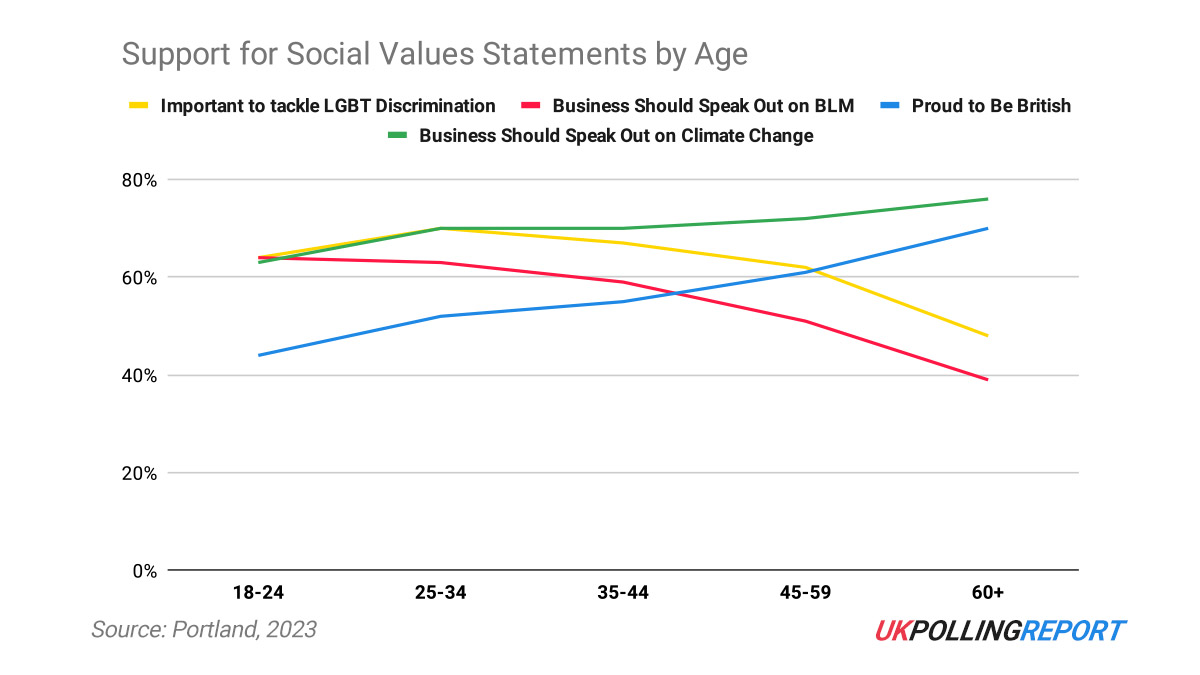
Portland have commissioned new polling, of over 9,000 people, to investigate generational divides. As well as the comforting conclusion that our society isn't as polarised as some headlines might suggest, they lead with the finding that people are holding progressive values for longer - focussing on the distinction between those aged over and under 60. This does seem to fit with a lot of the evidence from the poll.
On LGBT issues, 48% of those over 60 say it's important to tackle discrimination, compared to 64% amongst this cohort. Going from this question, there does seem to be a distinction between over 60s, where those who say tackling discrimination is important falls short of a majority, and those 59 and younger. Considering the figure in the older cohort is also close to a majority might also lend strength to claims that the country is less polarised. Though care should be taken when applying these conclusions more broadly.
Whether businesses should involve themselves with debates around the Black Lives Matter movement is a more polarising issue, as support declines amongst each cohort (from 64% to 39%). Likewise, pride in being British increases with every age group. Perhaps the most striking results are on whether businesses should speak out over climate change, over which those aged 60+ are most supportive - on 76%.
On the question of whether tackling LGBT discrimination is important, the topic prompted for is somewhat uncontroversial and not something that's often contested in the national public debate. It's not surprising it doesn't polarise opinion.
Take an issue with more fraught discussion - whether those aged between 16 and 18 should be allowed to change their gender. In a recent poll from PeoplePolling 37% of those aged 18-24 said 16 was to young to change gender, this proportion increased in every age group, as 79% of those aged 65+ agreed. On this issue, and others, the country is more polarised by age.
In this way, Portland's findings can produce useful context to polling discussions. Pollsters will, for obvious reasons, focus on politically contentious issues and going beyond this does highlight that there remains a wide plane of common ground.
It is difficult to interrogate the findings too much more without the structure of the specific questions, or more detailed methodology. Perhaps this will be possible when Portland publishes their tables. Either way, it is a well-presented and insightful piece of research.