National Projections Show Reform Would Fall Short of a Majority
As we work on updating the database, dealing with edge cases and debugging the algorithm's outputs we're are now confident that our two basic models are working as expected. At this stage of the election cycle we are running two models - a conventional uniform national swing model and the UKPR default model which we are still tweaking. It is always risky to send tweets out whilst updating the algorithm - like fixing the aircraft engine in mid-flight. Many thanks to all our followers on X who point out the clangers.
In these days of data heavy Multilevel Regression and Post-stratification (MRP) techniques combining a very large poll with other sources of information such as census data in order to estimate the local levels of support for parties in every constituency Uniform National Swing (UNS) modelling is very much out of fashion. This is despite the fact that in the 2024 general election it beat half the professional pollsters who were using MRP.
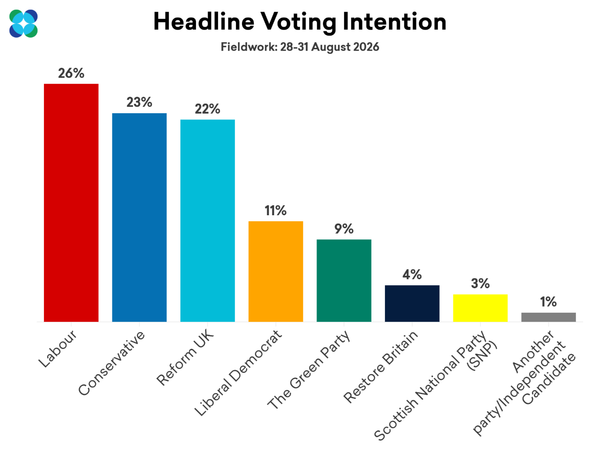
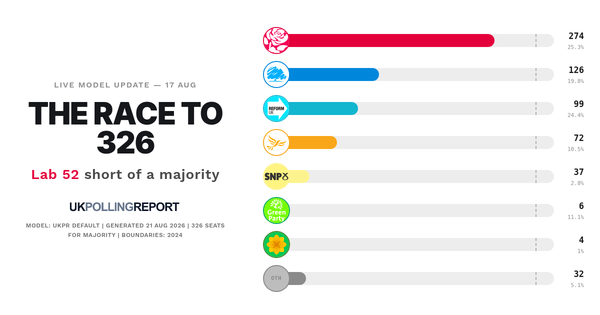
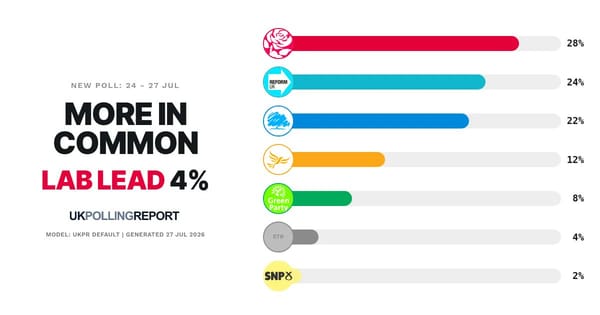
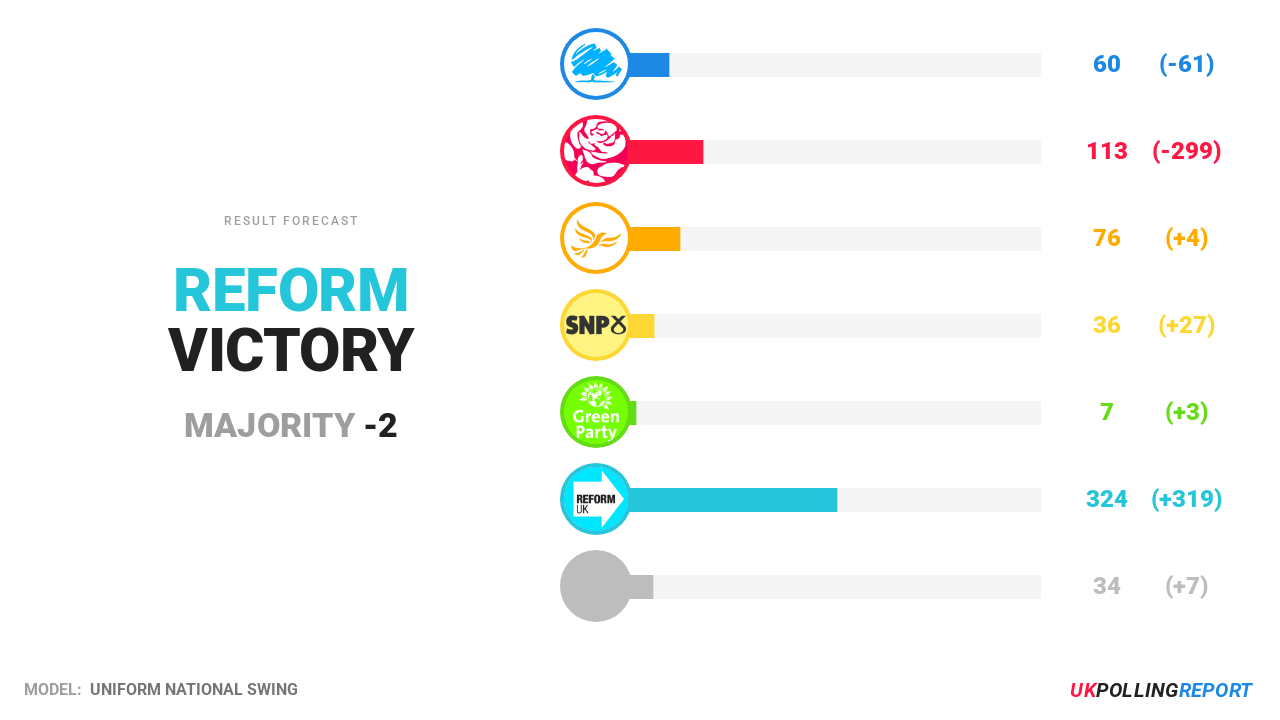
Our conventional UNS modelling projects Reform falling just 2 short of a majority based on a weighted rolling average of recent polls up to today:
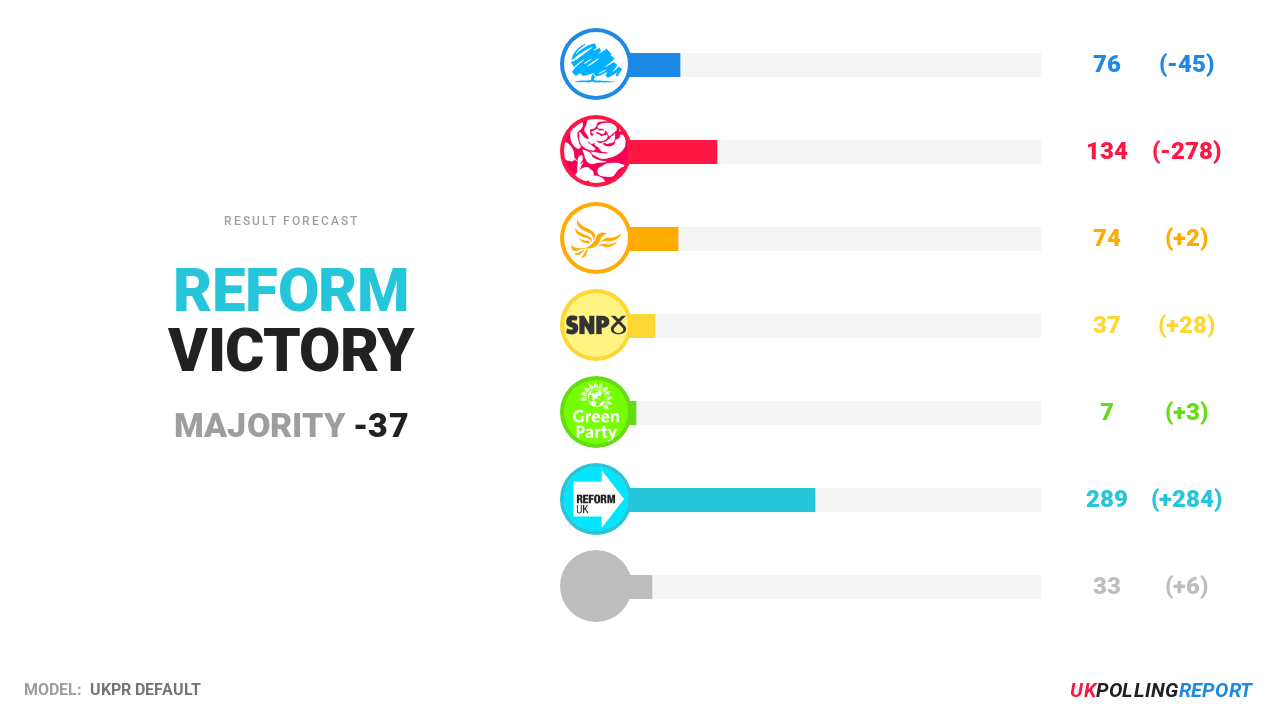
Our default model which is based on UNS modified by other subjective factors such as the incumbency effect and an estimate of tactical voting, projects Reform falling 37 short of a majority:
The usual caveats apply; this is projection based on current reported voting intentions, these invariably change in the heat of a general election campaign compared to mid-term.
We will be tweaking our default model on an ongoing basis as well as eventually introducing other models.
*A previous version of this article miscalculated the shortfall for a majority.