Pollsters' Predictions: What They Expect in Tomorrow's Local Elections
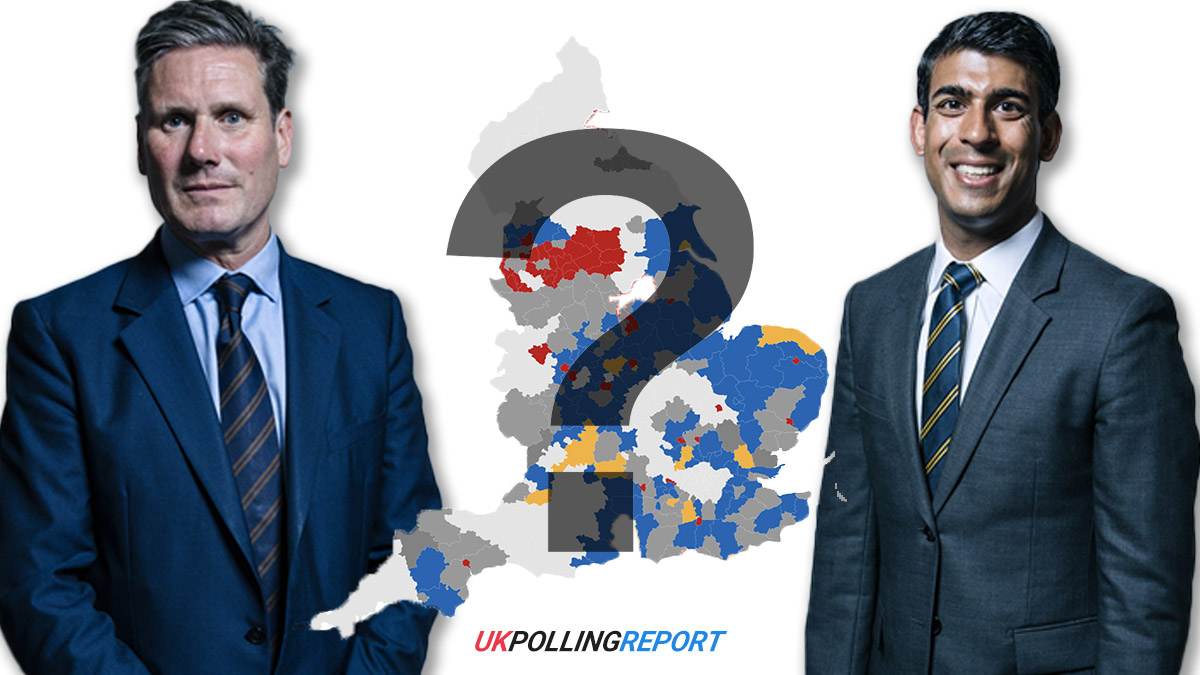
With Local Elections less than 24 hours away, the main party machines have been out in force setting expectations for Thursday's poll. Greg Hands was keen to set expectations low - he warned of Conservative losses around the 1,000-seat mark. Meanwhile, Keir Starmer did the same for how own bar, pointing out that it would be hard for the Conservatives to underperform their historically poor 2019 results, which this election cycle is based upon.
Prior to the 2019 Locals, national polls predicted an average Labour lead of around 4%. Meanwhile, the actual results for seats contested gave a 3% Conservative lead. This points to the fact that the current set of local seats is more favourable to the Conservatives than the national situation. It also goes to demonstrate one key fact. Local elections are not national polls, the electorate behaves differently, and caution should be taken when applying national Westminster figures to local contests.
The source of Greg's handy figures was from Rallings and Thatcher. Back in March, they suggested a 6% swing to Labour from 2019 would see Conservative losses of over 1,000. Since May 2019, there has been a Con-Lab swing in the national polling of around 7.6%. This seems to suggest that the Conservative Party Chairman might be right to set expectations low. However, this ignores the fact that this swing might not translate so directly into a local context. Low turnout and a preferential set of contests is likely to favour the Conservatives, whilst again local electorates are likely to behave differently in a number of ways that would favour them.
This might contribute to why Electoral Calculus' MRP model for upcoming results predicts a far more modest swing - and set of results. They estimate a Con-Lab swing of around 4%, with resulting Conservative losses in the 250 mark, compared to Labour gains of around 400. They predict the Liberal Democrats, Greens and Independents will also make losses.
YouGov also tried their hand at an MRP, though without overall figures. They predicted broad Conservative losses, including the control of councils such as Rugby, Wokingham and Swindon. YouGov also differs from Electoral Calculus in that they emphasise the possibility of continued Green Party advances.
When looking towards the potential implications for a general election, however, vote share benchmarks are more useful than those based on seats.
Omnisis have attempted a more traditional local elections voting intention poll. This is naturally a sparser field of polling, and comes with challenges of its own. They give a Labour vote share of 37%, to the Conservatives on 26%, the Lib Dems on 17% and the Greens on 9%. This 11% Labour lead is smaller than the 17% in the same national poll, mostly arising from third parties gaining votes. Translating this relative to 2019 would likely see a Con-Lab swing just below the national polling, at around 7%, and likely modest gains for the Liberal Democrats and Greens. This poll should be taken with caution - As pointed out in Omnisis' own write-up, 70% of the sample reported they were likely to vote, more than double the turnout last time round. This can be explained by the higher average attention of political polling samples.
The Beyond the Topline Substack has produced a fascinating long read, setting out vote share expectations based on an analysis of historical data. The headline finding is that current polls suggest Labour could expect a 9% poll lead. Above this would be a good night for Labour, likely translating into an election majority, above 11% and they're in large majority territory. Anything under 8% is an underperformance, whilst a margin below 5% could only encourage the 1992 narratives.
Therefore, on seat predictions there is a range of evidence in what is a complex and difficult to predict area. Losses of just 250 seem an underestimate, especially given the other evidence from current polling. Though, it's safe to say that a figure of 1,000 would be a very bad night for the Conservatives. A reasonable estimate for the Conservatives would be around the 500 mark, with Labour making comparable, if slightly lower, gains. The Liberal Democrats have a relatively strong result to live up to, so might find it hard to make major gains as the Greens will be hoping for some solid progress, as predicted by YouGov. Taking the more concrete figure of national vote share, a 9% Labour lead is a solid benchmark based on national polls.