Welcome to the New UK Polling Report

Welcome to the new UK Polling Report! As we officially relaunch this morning, it's worth running through the features of our re-engineered site.
On the front page you'll see featured articles, below which is our polling average and most recent model forecast. We then list our other articles, including Anthony's archived pieces, in reverse chronological order. We intend to introduce a range of voices to this section, so I welcome collaboration proposals. These can be sent to [email protected].
By navigating to the 'seats' page you can interact with the constituency database - this is at the heart of the new functionality of the site. You can search for a seat or candidate for a more detailed view. Within each page you can find basic information on each constituency, including results from the 2019 election, our model's prediction and a graph detailing how our model's results have shifted over time. It is possible to tweet our prediction for each seat with our AI generated chart forecast - try it on your own constituency.
You may notice that our database is as of yet incomplete. We would like to encourage our readers to update the candidate data using the [SUBMIT CANDIDATE INFO] button. The intention is to provide a reliable and comprehensive crowd-sourced database of candidates in all the constituencies in time for a general election. We would like to be the journal record for all candidates.
On each article and seats page we have also included a comment section to foster further debate and allow discussion focused on the constituency.
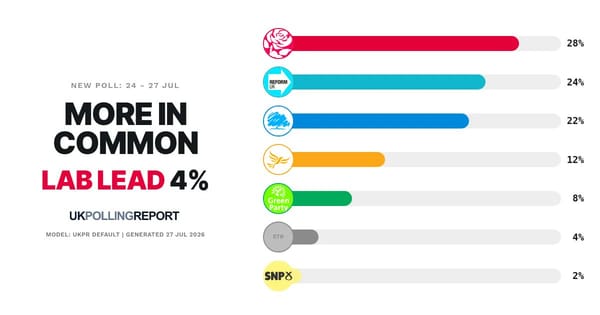
You can navigate to the polls page to see a database of recent Westminster voting intention polls, each with links to the tables or source. On both the polls and seats pages there is also a historical graph of our model and polling average over the past 3 months.
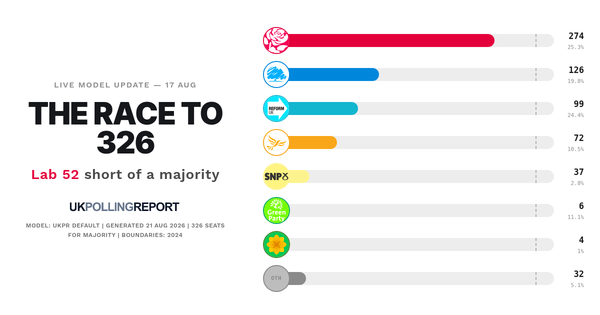
Our polling average takes into account all the most recent polls with each being weighted on how recent they are and the area they cover. Our model, built in consultation with Anthony Wells, uses a normalised uniform swing, with adjustments to keep results within a feasible range. We do have plans to run, in parallel, a model to apply swing proportionally, rather than in a linear manner. Though the overall results would remain similar. If you have a model/algorithm that you would like to apply using our data, it is possible we could code it. (Get in touch.)
From the site's header you can access a search function, which should allow readers to access our archives including Anthony's articles going back years. Other options at the top of our home page are to toggle 'dark mode', subscribe to our mailing list and to access our Twitter (do follow). We intend to use our social media to share intermittent model updates and articles as well as to publicise new polls as and when they are published. We also have a contact and about page which can be found on the footer or through the sidebar.
I look forward to hearing your feedback.