The Confusing Contradictions of Climate Polling

Close followers of recent news coverage could be forgiven for not having a clear appreciation of where, exactly, public opinion stands. From just one Opinium poll, released over the weekend, you could reasonably conclude all of the following claims: voters want to see climate action - more people even support climate action that would involve a limitation on the amount of flights they could take or the meat they consume - they just don't support climate action which would have a negative impact on the economy or their finances. A plurality of voters want a ban on gas boilers in new homes from 2025, yet oppose one on the sale of newly-made petrol cars from 2030.
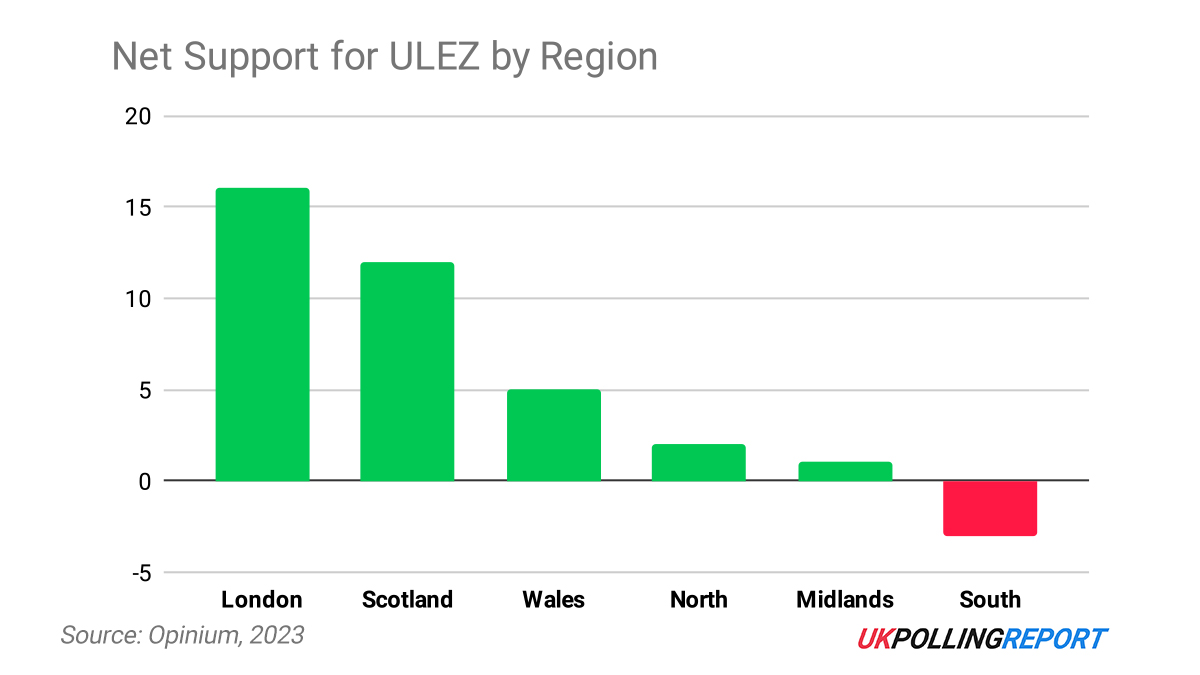
And despite the fact voters say they don't support climate action which would harm their own bottom line, voters in London are more supportive of ULEZ policies than any other region in the country. So with this in mind, how can we better understand the complex landscape of climate polling?
Firstly we can start off with what's clear: voters agree that man-made climate change is a real issue. 85% of those asked agreed on this, with a solid majority, 56%, adding "it is as bad as often described" and 29% agreeing it's a real issue, with the somewhat ambiguous proviso that it can be "often exaggerated". Just 7% of respondents said that man-made climate change was not a real issue.
The picture gets somewhat more complex when individual solutions are considered. Although you could reasonably settle on the fact that a number of policies have reasonable support, as listed above, none of these manage to achieve a majority of voters. From the same Opinium poll, the only environmental policy supported by more than half of all voters was the introduction of Low Traffic Neighbourhoods outside of local schools, which had 65% of voters support it and 15% oppose - and it's reasonable to assume that this margin is down to other factors as well as the environment.
Climate policies which would involve limitations on the frequency of flights people could take were amongst the next most supported policies prompted, with a +19 point net margin in favour, however with 44% advocating for this policy, it was short of majority support.
Part of the logic behind these findings could be a degree of ambivalence. Most policies prompted have a high proportion of "neither agree nor disagree" responses - suggesting voters aren't particularly animated by climate policies with bearable costs attached. Similarly, it could be reasonable to assume that voters might not feel equipped to judge on specific climate policies without more information on the relative costs and benefits associated with them.
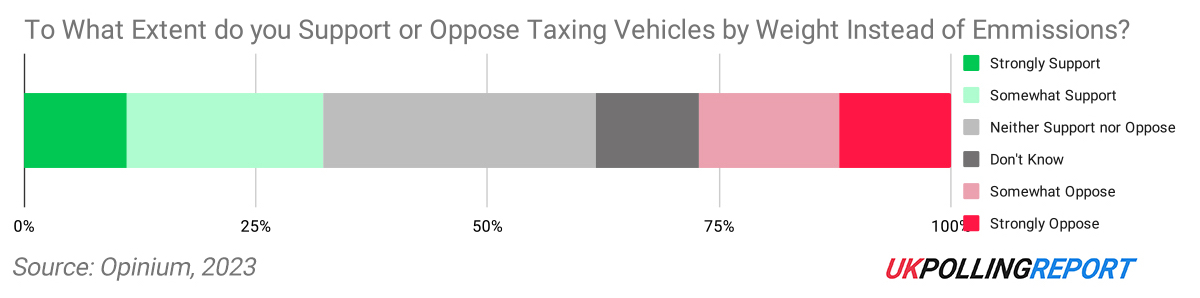
The findings also point to a danger in over-interpreting more ambiguous poll results. For example, the same poll asks voters whether they support or oppose taxing vehicles by weight instead of emissions - which would remove the exemption of electric cars from vehicle tax. 33% support this policy whilst 28% oppose it, meaning you could say that voters support rolling back some measures to combat to climate change.
However, this obscures the fact that a) the margin, of 5%, was relatively small and b) 40% of voters either didn't know or didn't have a preference for supporting or opposing a change of policy - evidently, that's more than the total of support for either side. The same could be said for most policies prompted - although you could judge that public opinion was in favour of, or opposed to, a host of climate policies to fit a particular narrative, the reality is more ambiguous.
Overall, yes, most voters think climate change is an issue and yes, a lot support action to counteract it - assuming the costs aren't too great - there is just limited awareness of, or consensus on, what specific solutions should be deployed to deliver this.