Can Britons' Economic Pessimism Being Worse than During the 2008 Global Financial Crisis Credibly Be Pinned on Starmer?
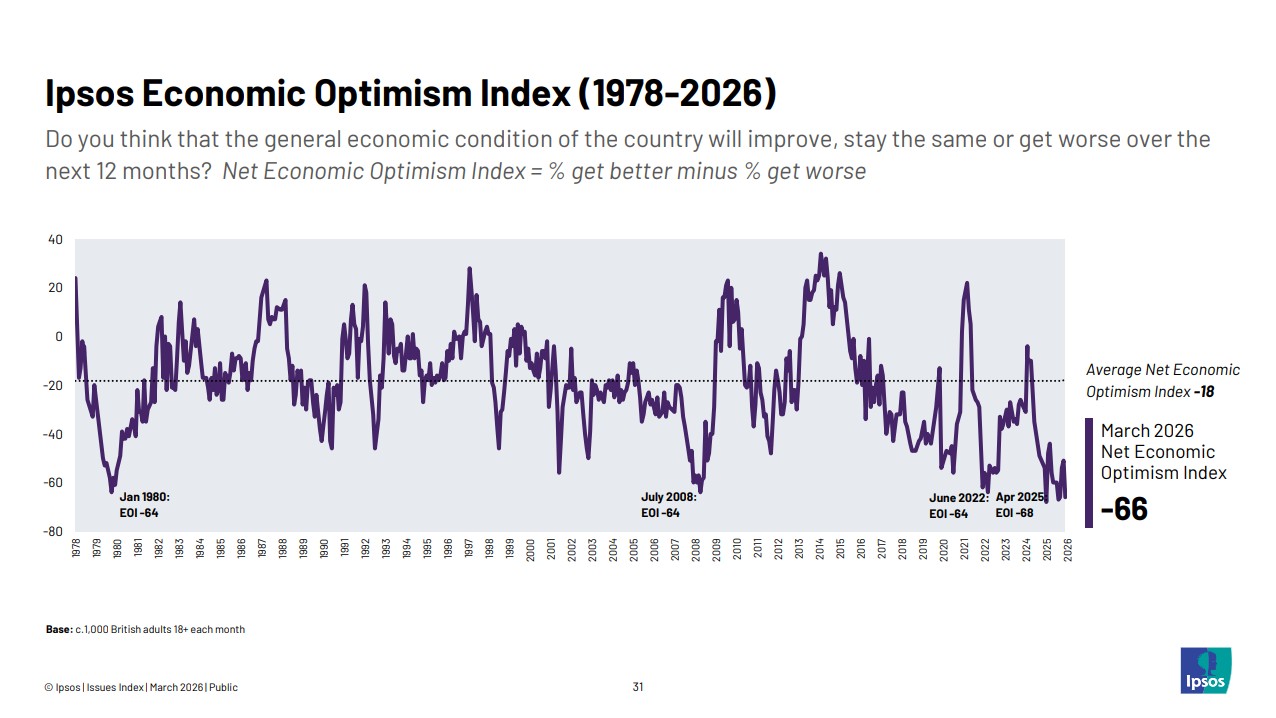
The British public's optimism on the economy has reached a level lower than was seen after the 2008 Global Financial Crisis. According to the Ipsos Economic Optimism Index, in March 2026, the net economic optimism index stood at -66. This figure is even less optimistic than the -64 recorded in July 2008. This is also in the wake of the Iranian conflict that has seen public concern about defence and foreign affairs double in the last month. It is a remarkable fact that Britons have been more pessimistic than optimistic about the economy for most of the last decade. A series of domestic and global shocks has appeared to fundamentally alter Britain’s national spirit.
One theory to explain this decade of cynicism is a series of ‘sharp shocks’ that have occurred over the last ten years. Whilst the 2008 crash was a huge systemic failure, it was a one-time shock. There has been a long period of instability, including the conflicting 2016 Brexit vote, followed by the global pandemic, which was the largest recession of late and the 2022 energy crisis prompted by Russia’s invasion of Ukraine. Unfortunately, these events drove UK inflation to 11.1% at its peak, which is the highest since the 1980s. This led to the Bank of England hiking interest rates to a 15 year high of 5.25%. Even the historical change in government in July 2024 didn’t persuade public sentiment. Still, confidence remains low as households battle cost of living pressures and £70 billion in tax increases. The unfortunate truth is that the compounding effects of these repeated economic and political shocks have contributed significantly to the persistent pessimism now evident in British public opinion.
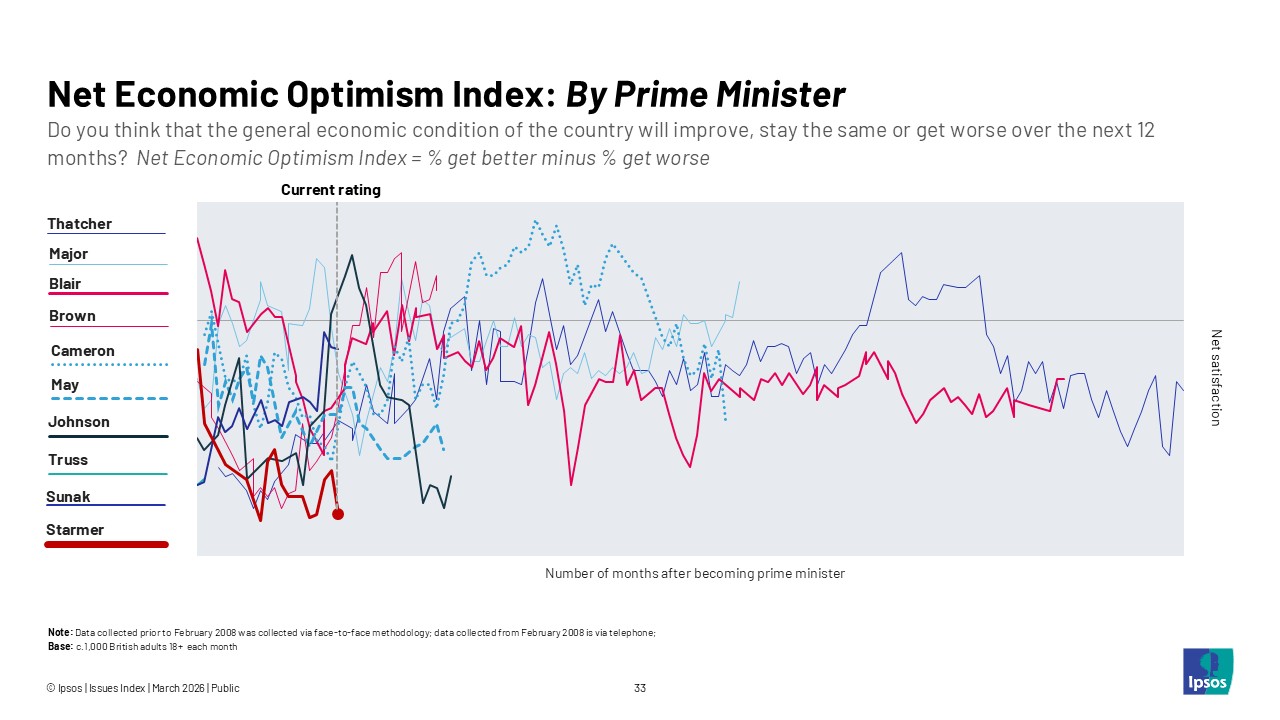
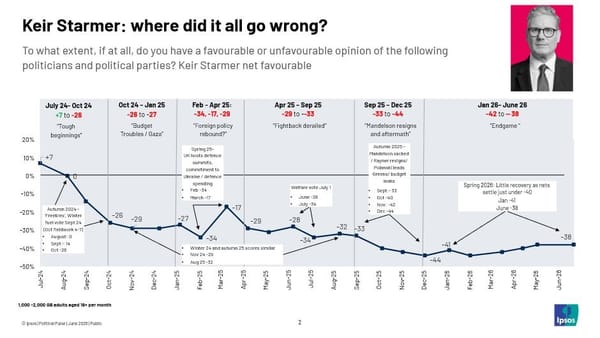
Is it Starmer's bad luck to have inherited a populace more pessimistic than with which any PM in living memory has had to contend? Even the the great boosterism of Boris Johnson when he was PM saw optimism plummet towards the end of his premiership. It feels that the nation's gloominess, much like the economic problems of the country, is structural.